Agentic AI needs orchestration: Running Joule beyond SAP for enterprise-grade autonomy
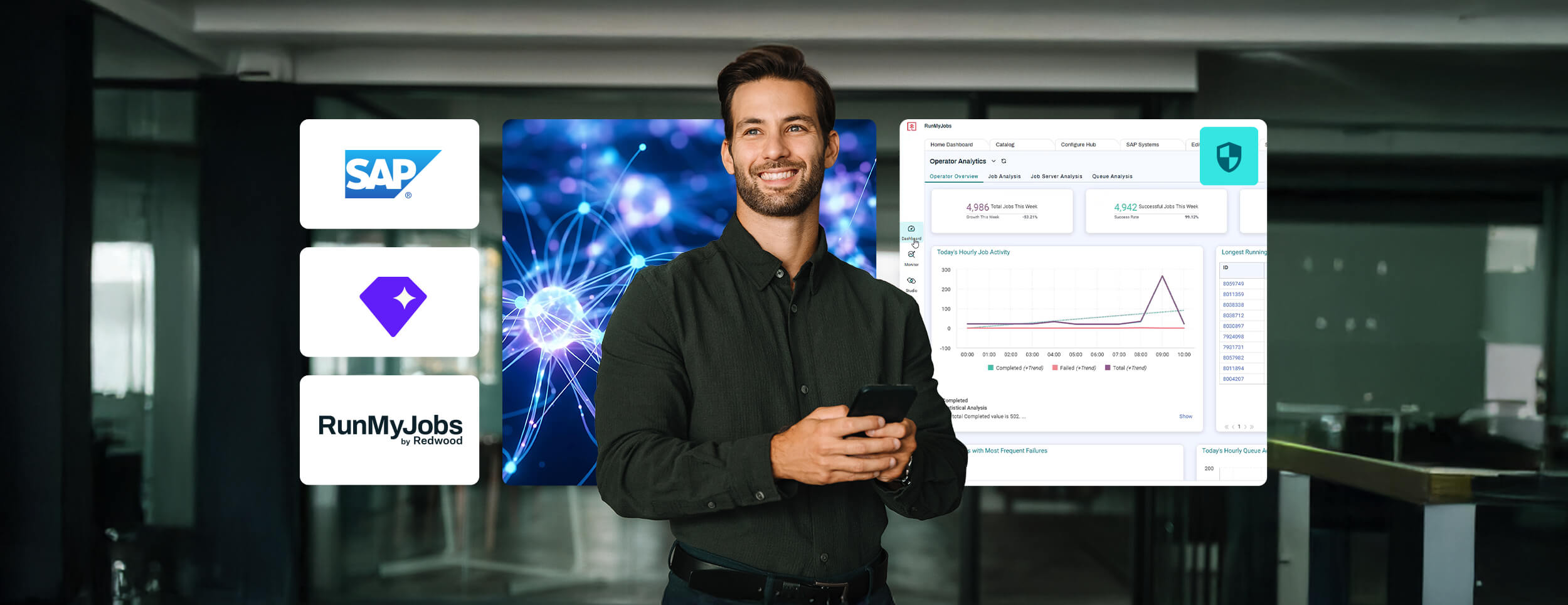
There’s a moment happening right now, unlike any we’ve seen before in enterprise technology. Agentic AI is not just changing interfaces, but it’s actually starting to take on real work.
This is evident in recent advances in SAP’s Joule. With the introduction of Joule Agents, what began as a conversational interface is evolving into something truly capable. A system that can coordinate tasks, reason through decisions and use advanced AI capabilities to initiate action across business functions and processes. That’s a meaningful step forward, but it also surfaces new questions.
You’re no longer architecting systems just for human efficiency. You’re designing for autonomous agents that can drive substantial efficiency gains and be accountable for execution across workflows — reliably and at enterprise scale.
That’s an altogether different kind of pressure for most. As McKinsey notes, agentic AI brings new operational risks that require governance from day one. Once AI begins to act, accountability and auditability are non-negotiable. Otherwise, can you trust what it does next?
Execution: The real differentiator
With Joule, everything begins with intent inside your SAP processes. You might ask, “Are we ready to close?” or “Why did this process fail?” or simply “What needs to happen next?”
Joule can understand that, acting as a context-aware layer that pulls from across your SAP landscape and coordinates agents to determine and act on the next steps. That is new and powerful. But I keep coming back to the same question in conversations with technology leaders: What actually does happen next?
In an enterprise environment, the answer isn’t usually straightforward. That’s because a real process doesn’t live in one system, and it doesn’t follow a straight line. Nor does it complete because one decision was made. It depends on dozens of things happening in the right order. Jobs, dependencies and handoffs must happen perfectly, and underneath it all, business data needs to be accurate and ready. It’s easy to underestimate this complexity.
When agents begin to take action, they don’t just trigger workflows, but they also trigger data movement, relying on pipelines and outputs that may sit outside SAP entirely. If that data is late, incomplete or inconsistent, the process will fail. So, while Joule can coordinate agents and initiate work, the outcome still depends on whether your underlying data and systems are orchestrated end to end.
Execution is where intent meets reality — and where dependencies either hold together or break apart. Unlike AI, execution can’t be approximate. Jobs must run in the right sequence, and systems have to stay in sync. Data must arrive when it’s expected, having already been formatted, cleansed, mapped and approved. If something fails, you need it to recover, reroute or escalate in a controlled way. The necessary level of consistency doesn’t happen by accident.
Joule thinks, RunMyJobs executes across SAP and non-SAP
Joule changes how work starts. It makes it easier to move from question to action. But enterprise value is defined by how work finishes:
- Whether the process completes
- Whether the data is right
- Whether the outcome can be trusted
That’s what RunMyJobs by Redwood delivers. It orchestrates and continuously optimizes end-to-end process execution and automation across SAP and non-SAP systems, coordinating not just workflows and data pipelines but the agent-driven actions within them — including triggering additional agents as part of a process or error remediation. While an agent can begin or resolve part of a process, the business still needs to understand what happened, how it happened and whether it followed the right controls.
So when Joule initiates work, RunMyJobs ensures:
- The right jobs run in the right sequence
- Data moves when and where it’s needed
- Dependencies are resolved across systems
- The process completes as expected
- Every action is observable and traceable, end to end
- Required approvals, reviews and escalations happen at the right points in the process
- Critical SLAs are met — or flagged and escalated if at risk
- Additional Joule Agents are involved in the process when required
Most enterprise processes don’t stop at SAP. A good portion of the work already lives outside the core ERP in data platforms like Databricks and Snowflake — and often in legacy databases that are still part of the pipeline. External systems feed inputs back into SAP, and integrations connect everything in between. From a user perspective, it’s still one process. From a systems perspective, it’s distributed. Orchestration must, therefore, extend beyond SAP.
Joule can initiate work across that landscape. But for that work to complete, those systems need to operate as part of a single, coordinated flow. That’s what RunMyJobs enables: consistent execution across SAP and non-SAP environments within the broader enterprise ecosystem, with full visibility into how work progresses from start to finish. No fragmentation between AI agents, systems and workflows.
Agentic orchestration in practice
The pattern that’s possible:
- A user expresses intent in Joule
- Joule evaluates business context and coordinates the required actions
- RunMyJobs executes those actions across systems, workflows and data pipelines
- The process completes end to end with governance, visibility and control
For the financial close, for example:
A user asks Joule: “Are we ready to close?”
Joule evaluates readiness across SAP and determines that the close can proceed, then initiates the process. From there, RunMyJobs executes the close across systems.
- Allocations run
- Consolidation jobs are triggered
- Reporting workflows are executed
- Dependencies are enforced so that each step completes in the correct order
- Potential issues are identified across the process chain, with RunMyJobs triggering the necessary resolution steps before they impact the close
If an issue arises, it’s handled within the process, not discovered after the fact.
The control plane for agentic operations
As agentic AI moves from isolated use cases into core business processes, something else becomes clear: you don’t just need execution; you need control. This is what makes enterprise AI viable at scale. When agents are initiating work across systems, the questions change. It’s no longer just knowing whether a process can run. It’s whether you can see, govern and trust it while it runs across your SAP environment and everything connected to it.
- Which systems were touched?
- What data moved, and where?
- Why did a process take a specific path?
- What happens if two actions conflict?
These are everyday concerns in enterprise environments.
RunMyJobs acts as the control plane for agentic operations, ensuring that work runs within defined boundaries. Every action is tracked, and every dependency is visible. Policies and approvals are enforced before execution, not after. If something deviates from the expected path, it can be detected and handled before it becomes a business issue.
This is what allows agentic AI to move beyond experimentation, because autonomy without control doesn’t scale. Instead, it creates risk. To make autonomy usable, you must expand from individual agent-driven tasks to fully orchestrated, end-to-end processes — with confidence in the outcome.
Let orchestration build your path to autonomy
Agentic AI, including agentic Joule, changes how work starts. Do you have a plan for what happens after?
This is where most organizations are hesitating right now. Initiating work through AI is one thing, but relying on it to run across SAP, connected systems, and every data dependency without introducing risk is something few have fully envisioned, much less put into practice.
Autonomy takes shape over time, as each action runs as it’s supposed to and each process becomes predictable and governed. Move your enterprise forward now, with the leading orchestration platform for the enterprise, turning AI-driven intent into reliable business value.
Exploring how Joule can move from insight to execution in your environment? See how RunMyJobs orchestrates end-to-end processes across SAP and non-SAP systems.
About The Author

Gerben Blom
Gerben Blom has 20 years of expertise in the workload automation space. At Redwood, he has held roles as Principal Product Architect and Product Leader and is now Field CTO for RunMyJobs by Redwood. Considered the global subject matter expert on automation and digital transformation topics, he has a background in implementing and designing customer use cases and abstracting them into product features, enabling the biggest organizations on the planet to achieve their business goals. Gerben has always put the customer first to maximize the value of Redwood solutions in their automation and transformation journeys.
Gerben holds a Master’s in Artificial Intelligence from the University of Groningen, the Netherlands.

