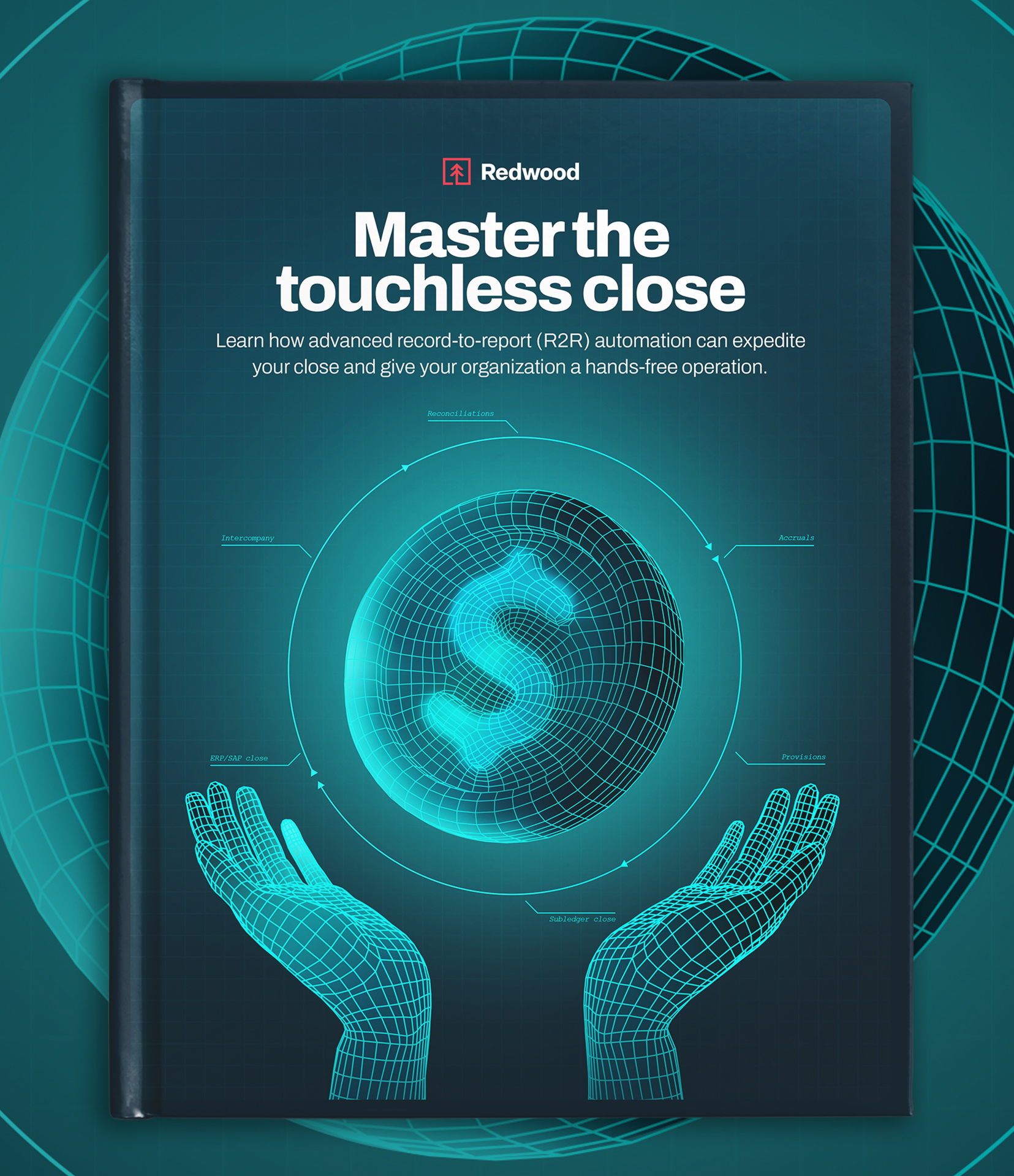
Master the touchless close
Learn where automation stops short in your financial close
Most finance and accounting teams believe their close is automated. It isn’t.
Checklists are digital, approvals are tracked and dashboards are in place, but the actual work — journal creation, accruals, reconciliations and intercompany — still depends on people, spreadsheets and manual coordination. This is the gap holding finance back.
Discover why automation efforts often stop at visibility, where manual work still hides inside your close and what it takes to remove it entirely.
Download our comprehensive whitepaper
Trusted by leading companies








Why download this guide?
Most “automated” closes still rely on manual execution. This guide helps you identify where that work exists and how to eliminate it.
You’ll learn how to move beyond task tracking and workflow tools to a model where accounting activities are executed automatically across systems, entities and processes, so your organization can achieve a close that is faster, more predictable and far less dependent on last-minute effort.
Inside, you’ll find:
Use this guide to get practical insights into how accounting and finance teams are eliminating manual work and running a more predictable close. You’ll also learn:
- Why 97% of organizations still rely on people to complete the close
- Where manual work actually sits in record-to-report
- The difference between task automation and execution automation
- How orchestration replaces manual coordination across teams, systems and entities
- What a touchless close looks like in practice, with real-world examples
- Practical steps to identify your biggest automation opportunities and get started
With automation, we reduced the time it takes every month to complete the close activities for 40 entities by 98%.