
Long Form
Uncover your R2R automation maturity and transform your financial close
Pinpoint where manual work still hides in your close.
Your record-to-report (R2R) tools manage the close. Finance Automation by Redwood runs it. Execution happens automatically — from SAP transactions and calculations to postings and dependencies — so your finance team can focus on reviewing outcomes, not producing them.

These results come from automating execution — not just managing workflows.

97% of manual tasks eliminated through execution automation

Bank reconciliations reduced from 1 hour to 7 minutes (a time savings of 88%)

1,300 users on a single global platform

100% improvement in consistency and quality, 70% less manual effort

Single platform orchestrating R2R across global entities

Cut manual effort across A2R by ~50%

98% reduction in close time, 48 processes automated

Hands-off close achieved, “war rooms” eliminated

Accounting and finance teams have invested heavily in close management software, reconciliation tools, journal templates and task trackers. Yet every month, the same story:
Finance Automation executes close tasks from start to finish, without human handoffs. It doesn’t track the work. It does the work.

Automate up to 90% of your financial close tasks, including often overlooked and time-consuming areas.

Coordinate complex processes and trigger dependent activities across systems without manual intervention required.

Get greater reliability and control with fully supported and maintained connections to your core applications and systems.

Leverage a catalog of pre-automated tasks that work with SAP and many other business applications.

Empower and inform business users with built-in business process management and clear dashboards.

Capture every action automatically with full process-level logging. No extra work or retroactive documentation needed.

Finance Automation takes a different approach. We automate the execution layer — the actual work that consumes finance hours — and orchestrate the sequence so tasks progress automatically. The result: a close that runs itself.
Three systemic shifts are converging, and each one exposes the risk of carrying manual journal work into the future.
ECC support ends. If you’re migrating, why replicate manual processes in a new system?
Since 2019. You cannot hire your way out of manual close processes.
Manual processes create control gaps. Auditors are paying attention.
Finance Automation goes beyond workflow coordination to handle the execution itself by extracting data, running calculations, applying validations, posting to SAP and triggering dependent steps across every stage of the close.
Automate the full journal lifecycle from data extraction and calculation to validation and SAP posting. No spreadsheets. No manual uploads. No rework.
Orchestrate task progression, dependencies and SAP steps across every entity. When one step completes, the next begins automatically.
Automate matching, resolution and counterparty posting across buying and selling entities. Discrepancies are resolved before they become problems.
Automate SAP data extraction, matching logic and exception routing. Reconciliations are prepared continuously — not assembled after month-end.
Automate the most manual parts of the close: calculations, business logic, SAP postings and reversals. Consistency is enforced across every entity.
Understand why Finance Automation can automate what other tools can’t. Execution automation plus intelligent orchestration — the architecture that runs the close.
We believe SOAP platforms should automate the execution of complex, cross-system business processes. Traditional R2R tools manage workflows. Finance Automation runs them.
| Traditional R2R tools | Finance Automation by Redwood |
| Manage tasks and checklists
Track approvals and statuses Provide visibility into the close Depend on people to do the work |
Automates SAP transactions and postings
Executes calculations and business logic Orchestrates dependencies automatically Runs the close — people review results |
Use Finance Automation with SAP without the manual work. You don’t have to extract data, process it externally and push it back. Finance Automation executes inside SAP by reading, validating and posting directly to your ledger. One source of truth. No sync issues. No integration maintenance. No “which system is right?”

Transform your finance processes with Redwood’s finance automation solutions for SAP. Finance Automation by Redwood seamlessly integrates with SAP to automate key finance processes like accruals and provisions, reconciliations and journal entries and much more. Finance Automation extends beyond SAP ERP and transforms your financial close into a streamlined, touchless operation.
See how finance leaders aren’t just optimizing the close — they’re removing the work behind it.
Close tasks automated
Hours saved annually
Faster close cycles
Manual tasks eliminated
Explore insights, research and real-world context to help you benchmark maturity, identify blind spots and take the next step toward an autonomous close.

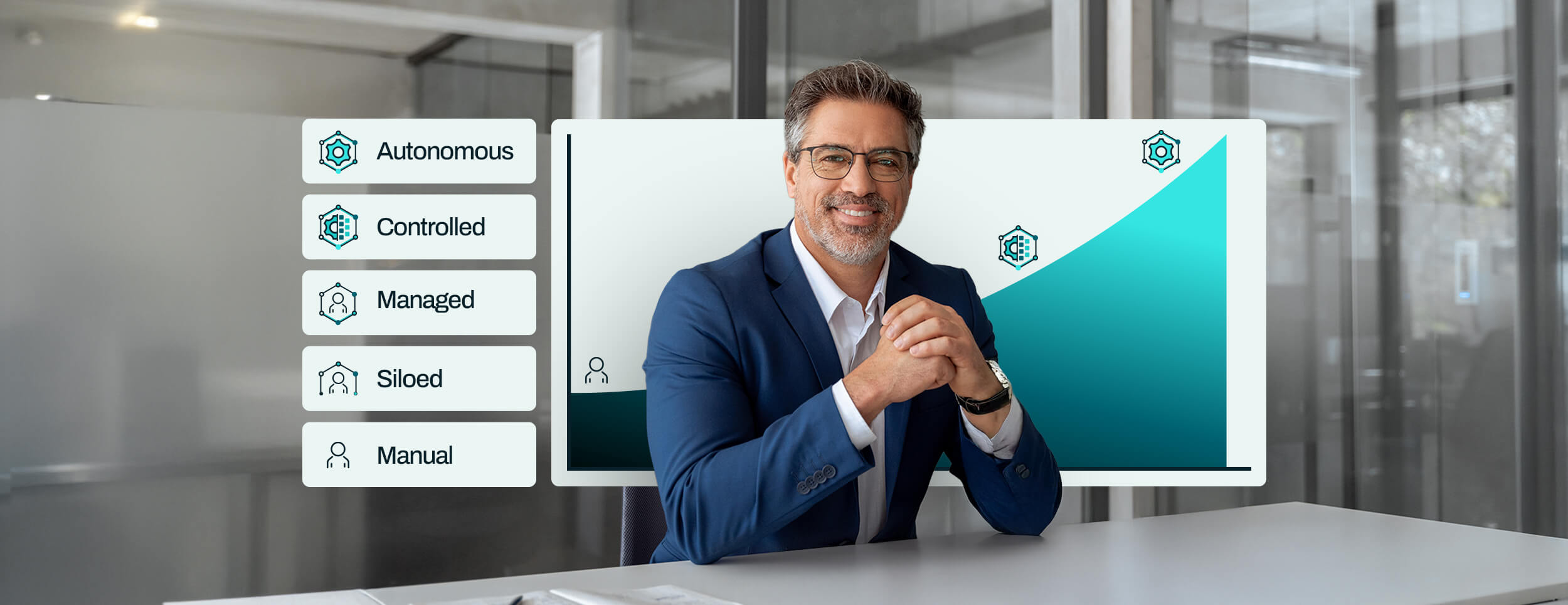

Automation reshapes the entire record-to-report process by removing manual friction from the core R2R process and replacing it with consistent, system-driven execution. Instead of relying on spreadsheets, email approvals and repetitive data entry, organizations use process automation to standardize journal entries, intercompany accounting and reconciliations. This reduces human errors, strengthens audit trails and improves the integrity of the general ledger. As a result, the financial close process becomes more predictable, and the month-end close shifts from a reactive scramble to a controlled sequence of automated steps. Automation also helps streamline handoffs between accounts payable, accounts receivable and other finance functions that feed into R2R activities. By connecting upstream cycles such as procure-to-pay and order-to-cash, finance and accounting teams gain tighter control over the flow of financial data into reporting.
The broader impact extends beyond efficiency. With real-time visibility into R2R activities and continuous orchestration, the CFO and finance leaders gain access to reliable financial information earlier in the cycle. That accelerates financial reporting, improves forecasting and supports more confident decision-making. Instead of waiting for static reports, stakeholders can access real-time insights into performance, cash positions and variance analysis. This strengthens overall financial performance and protects long-term financial health. Finance Automation by Redwood makes this shift possible by automating the execution layer of finance — not just workflows — and enables finance teams to move from doing the work to reviewing the results.
R2R software is technology designed to manage and automate the record-to-report process, which includes journal entries and reconciliations. It connects the general ledger with upstream processes such as accounts payable, accounts receivable, procure-to-pay and order-to-cash to ensure accurate and complete financial data. Rather than serving as a digital checklist, R2R software drives the underlying accounting process and enforces standardized controls across entities. It helps streamline repetitive tasks, reduce reliance on spreadsheets and maintain complete audit trails for compliance.
Advanced R2R software also delivers real-time monitoring and automated notifications when exceptions occur. That gives accounting teams, the CFO and other stakeholders continuous insight into the status of the financial close process. By supporting multiple use cases across reconciliation, intercompany and journal automation, it creates a single environment for structured data management. The result is more consistent financial reporting, stronger governance and the ability to optimize operations as complexity increases. Finance Automation by Redwood leads this category by delivering orchestrated execution and orchestration that works natively with SAP and scales across the most complex global environments.
Record-to-report automation works by embedding process automation directly into the R2R process and allowing systems to execute tasks instead of relying on manual intervention. Automation tools integrate with ERP systems to extract data, validate entries, post journals to the general ledger and trigger downstream close activities. Automated workflows replace manual data entry, route approvals and generate system-based notifications when predefined conditions are met. This ensures R2R activities progress in the correct sequence during the month-end close and throughout the period.
As transactions flow in from accounts payable, accounts receivable and intercompany processes, automation standardizes validation and posting rules. That improves accuracy in financial statements and supports audit-ready documentation with detailed audit trails. Continuous real-time updates provide real-time visibility into task status, reconciliation progress and open issues. The CFO and finance leaders can then use these real-time insights to support faster decision-making and more accurate forecasting. By integrating execution, validation and reporting into a single orchestrated flow, record-to-report automation optimizes operational efficiency and control across the entire accounting lifecycle. Finance Automation by Redwood powers this flow by combining execution automation with orchestration to eliminate manual effort across journals, reconciliations, intercompany and close management.
A comprehensive record-to-report automation platform includes several core components that work together to streamline the record-to-report process. First is journal and general ledger automation, which manages recurring entries, like, provisions, accruals and reclassifications while enforcing validation rules. Second is automated reconciliation, which applies rules to transactions and flags discrepancies. Third is close management functionality that orchestrates dependencies across entities and supports the financial close process with structured workflows. Fourth is integrated intercompany accounting, which ensures transactions between entities are matched and resolved before final reporting. These components combine to optimize the operational and control aspects of the R2R process.
Beyond functional modules, the platform must support secure data management, embedded audit trails and role-based access to protect financial information. It should integrate with upstream finance cycles like procure-to-pay and order-to-cash to ensure completeness of financial data. Advanced platforms provide performance metrics and automated notifications for exception handling. They also incorporate intelligent automation capabilities that reduce manual intervention across R2R activities. These elements create a scalable foundation that supports accurate financial reporting and confident oversight from the CFO and executive stakeholders. Finance Automation by Redwood brings these capabilities together in one unified platform that offers native SAP execution and a proven model for orchestrating the most complex enterprise close cycles.
Automating R2R delivers measurable gains in operational efficiency by eliminating repetitive tasks and minimizing human errors in the accounting process. By standardizing workflows across the record-to-report process, organizations can streamline journal entries and reconciliation activities. This leads to a faster, more predictable month-end close and a more controlled financial close process overall. Automation also strengthens compliance through consistent validation rules and transparent audit trails. With improved accuracy in the general ledger, finance teams produce more reliable financial statements and improve the quality of financial reporting. These efficiencies directly support stronger financial performance and improved cash flow oversight.
The strategic benefits are equally significant. Continuous real-time visibility into R2R activities gives the CFO and leadership team access to timely financial information. That enables more accurate forecasting, stronger governance and faster informed decisions. Automation also supports scalable close processes across multiple entities, which reduce delays that can impact stakeholders and board reporting. When paired with orchestration and advanced analytics, R2R automation shifts finance from reactive reporting to proactive insight generation. Organizations that adopt this approach position finance as a driver of sustainable financial health and strategic decision support. With Finance Automation by Redwood, these benefits are no longer aspirational because they’re built into every close.
Gartner, Inc. Magic Quadrant for Service Orchestration and Automation Platforms. Hassan Ennaciri, Daniel Betts, etl. 5 August 2026.
GARTNER and MAGIC QUADRANT are trademarks of Gartner, Inc. and/or its affiliates in the U.S. and internationally and are used herein with permission. All rights reserved.
Gartner does not endorse any vendor, product or service depicted in its research publications, and does not advise technology users to select only those vendors with the highest ratings or other designation. Gartner research publications consist of the opinions of Gartner’s research organization and should not be construed as statements of fact. Gartner disclaims all warranties, expressed or implied, with respect to this research, including any warranties of merchantability or fitness for a particular purpose.
These graphics were published by Gartner, Inc. as part of a larger research document and should be evaluated in the context of the entire document. The Gartner document is available upon request from https://staging.marketing.redwood.com/resource/gartner-soaps-mq/.