Reduce cost and complexity across your hybrid cloud environment
Replace legacy schedulers and fragmented automation tools with a cloud-first orchestration platform that eliminates technical debt and simplifies hybrid cloud operations.
-

Pre-built ERP connectors
RunMyJobs provides deep, certified integration with SAP and Oracle out of the box, along with a broad connector catalog spanning the full hybrid ecosystem — no custom scripting required.
-

AI-powered automation lifecycle
Use built-in AI from workflow design through production monitoring to accelerate build, reduce errors and surface anomalies before they impact SLAs.
-

End-to-end observability
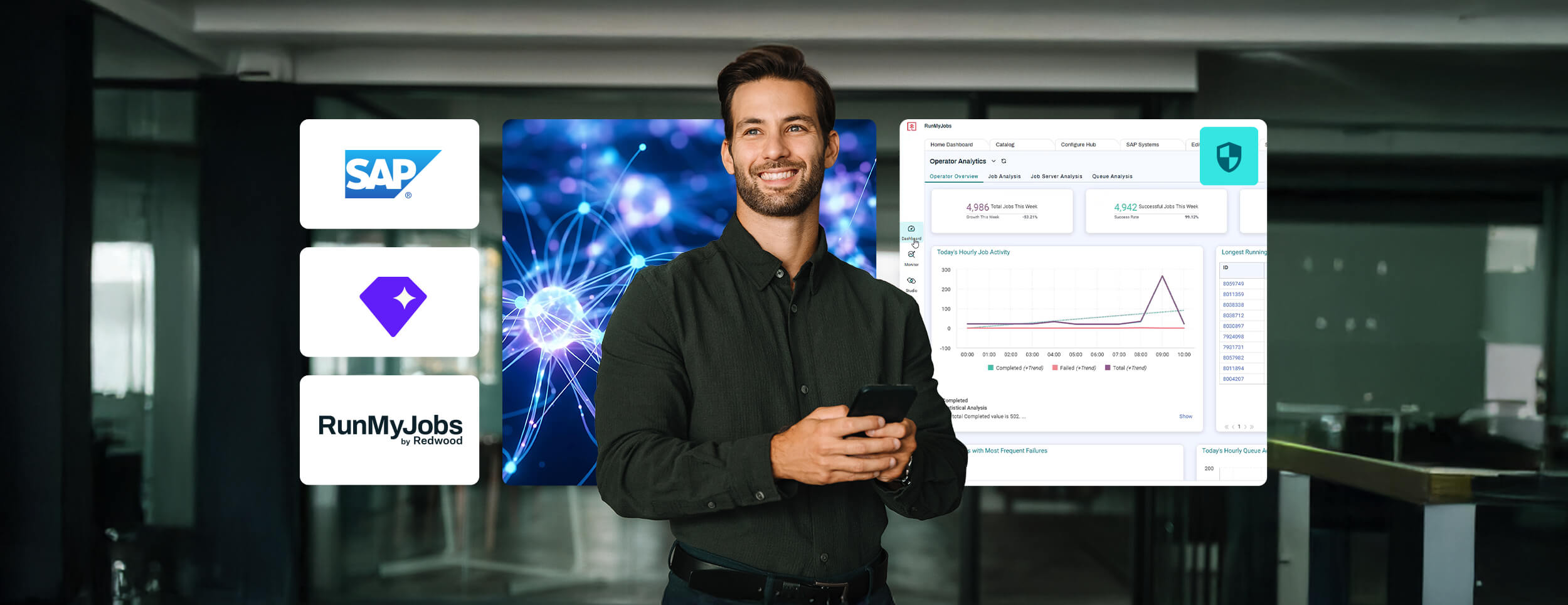
Monitor workflows in real time and predict SLA risks across ERP, SaaS and data pipeline dependencies through a single, unified view.
-

Workflow governance and compliance
Ensure governed, auditable workflows with built-in RBAC to meet compliance requirements for regulated industries, including banking and financial services.
-

Event-driven and batch orchestration
Synchronize legacy ERP batch processing with real-time cloud microservices and event-driven workflows from a single control plane.
-

Agentless SaaS architecture
Deploy instantly, upgrade without downtime and eliminate infrastructure overhead with 99.95% uptime, no agents and no maintenance windows.
Deep integration across ERP software and your hybrid cloud ecosystem
The only SAP Endorsed App for orchestration
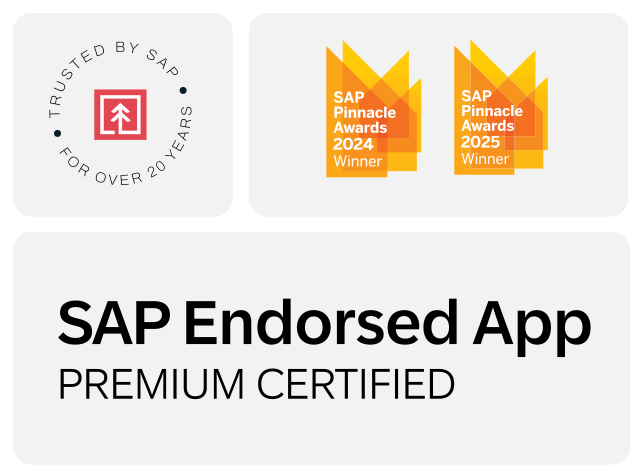
RunMyJobs, the #1 workload automation (WLA) and orchestration platform for SAP environments, holds the exclusive distinction of being both an SAP Endorsed App and included in the RISE with SAP reference architecture.
Premium certified and backed by 20+ years of partnership and co-innovation, RunMyJobs maximizes the value of your SAP investment, now and into the future.
The leading orchestration platform for the Oracle enterprise
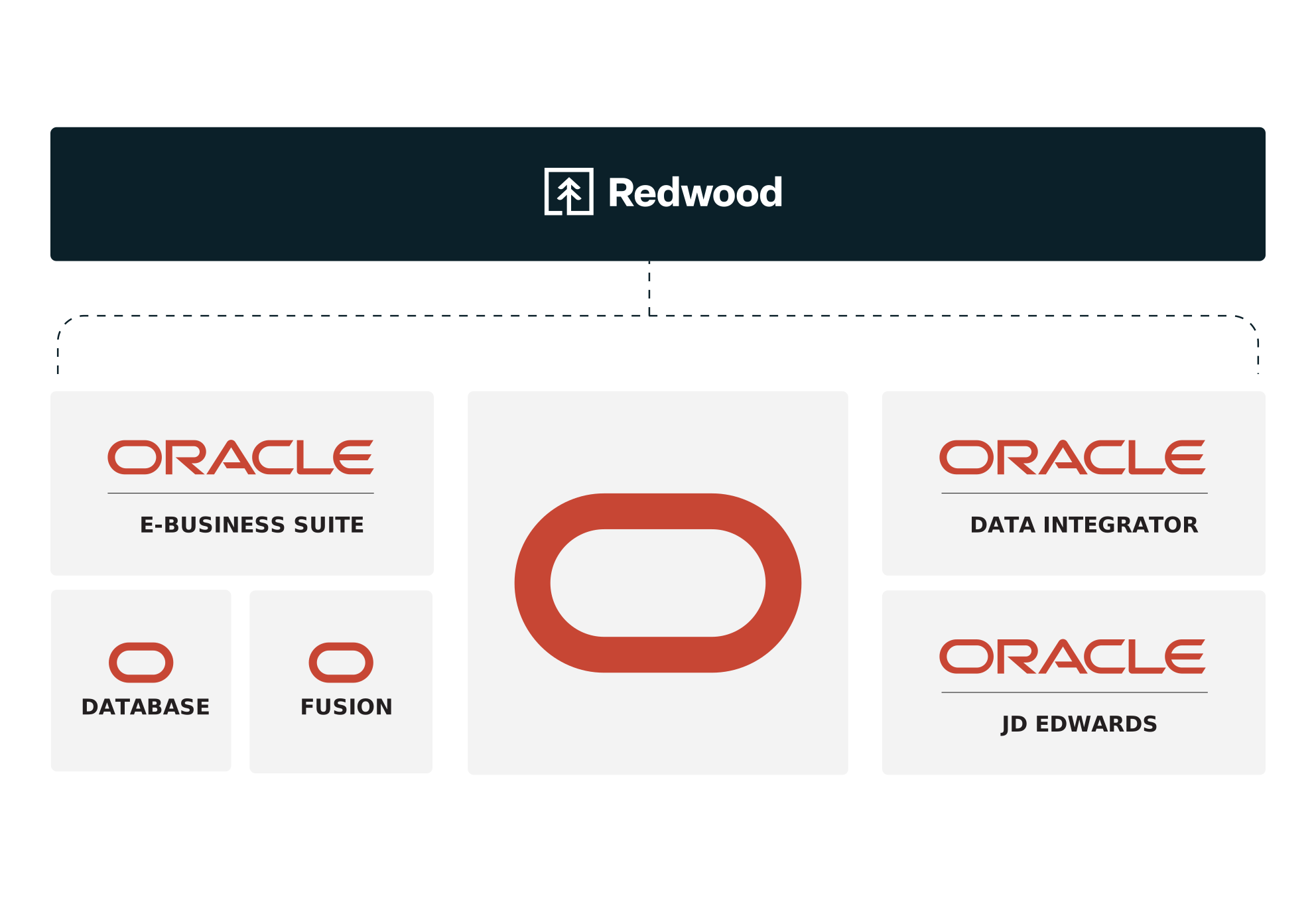
RunMyJobs empowers customers to scale, secure and govern mission-critical processes across the entire Oracle ecosystem, including Oracle Fusion, EBS, JD Edwards and more.
Through its SaaS-first orchestration framework and agentless architecture, RunMyJobs drives business transformation while eliminating the latencies of siloed ERP scheduling.
Proven results from next-generation ERP automation
Automation and orchestration with RunMyJobs delivers measurable outcomes across cost, operational efficiency and performance in complex hybrid cloud environments.
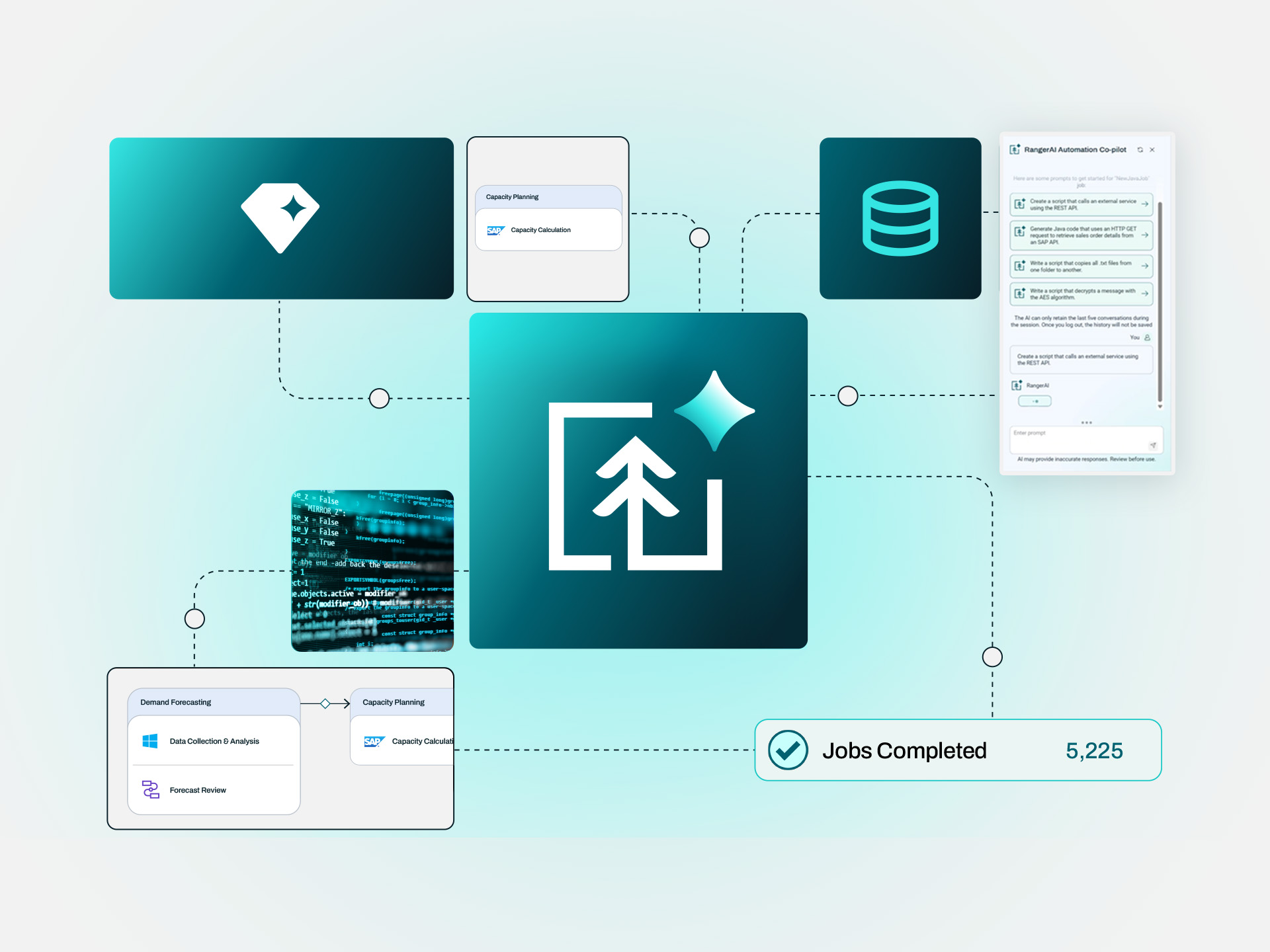
AI across every stage of ERP workload automation
RunMyJobs is AI-powered across the full automation lifecycle, from building and deploying ERP workflows to monitoring and resolving production issues.
Unlike point tools that bolt on AI as a feature, RunMyJobs embeds AI at every stage, so teams in all business functions and at all skill levels can build enterprise-grade ERP automations faster and catch SLA risks before they become outages. It also prepares the hybrid cloud estate for the next generation of AI-driven business services.
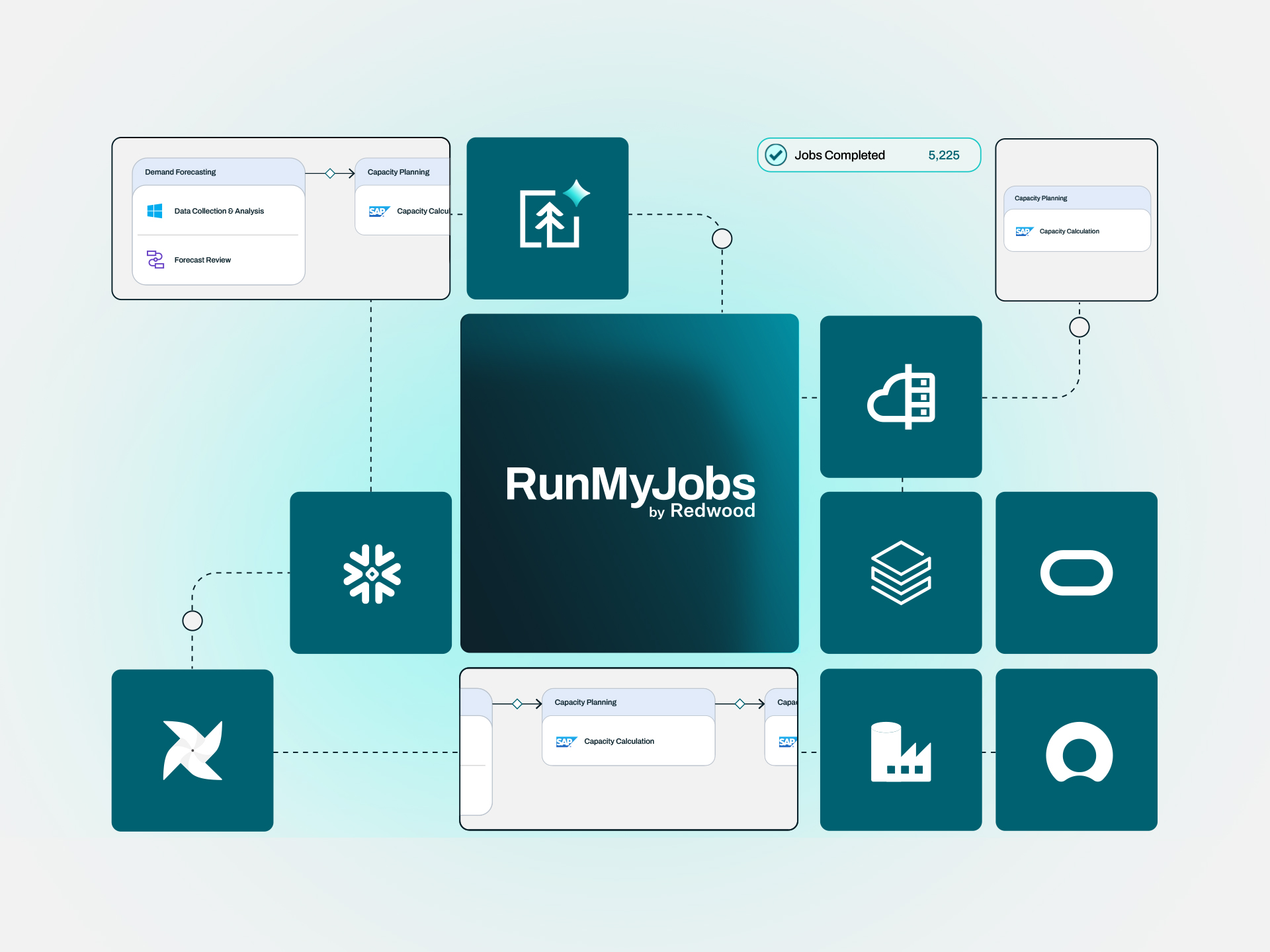
Purpose-built for hybrid cloud at enterprise scale
RunMyJobs SaaS orchestrates and automates ERP, SaaS, custom application and data pipeline workflows across cloud, self-hosted and legacy on-premises systems. It unifies workflows on a single, end-to-end production platform with observability, governance, reliability and scalability built in.
RunMyJobs is the only SAP Endorsed workload orchestration platform architected for hybrid cloud and made to integrate SAP and Oracle with SaaS and custom cloud apps reliably.
Solving for common gaps in hybrid workflow execution
As ERP workflows extend across SaaS, cloud and on-premises systems, dependencies become harder to manage. A unified orchestration layer brings visibility, control and consistency across every process.
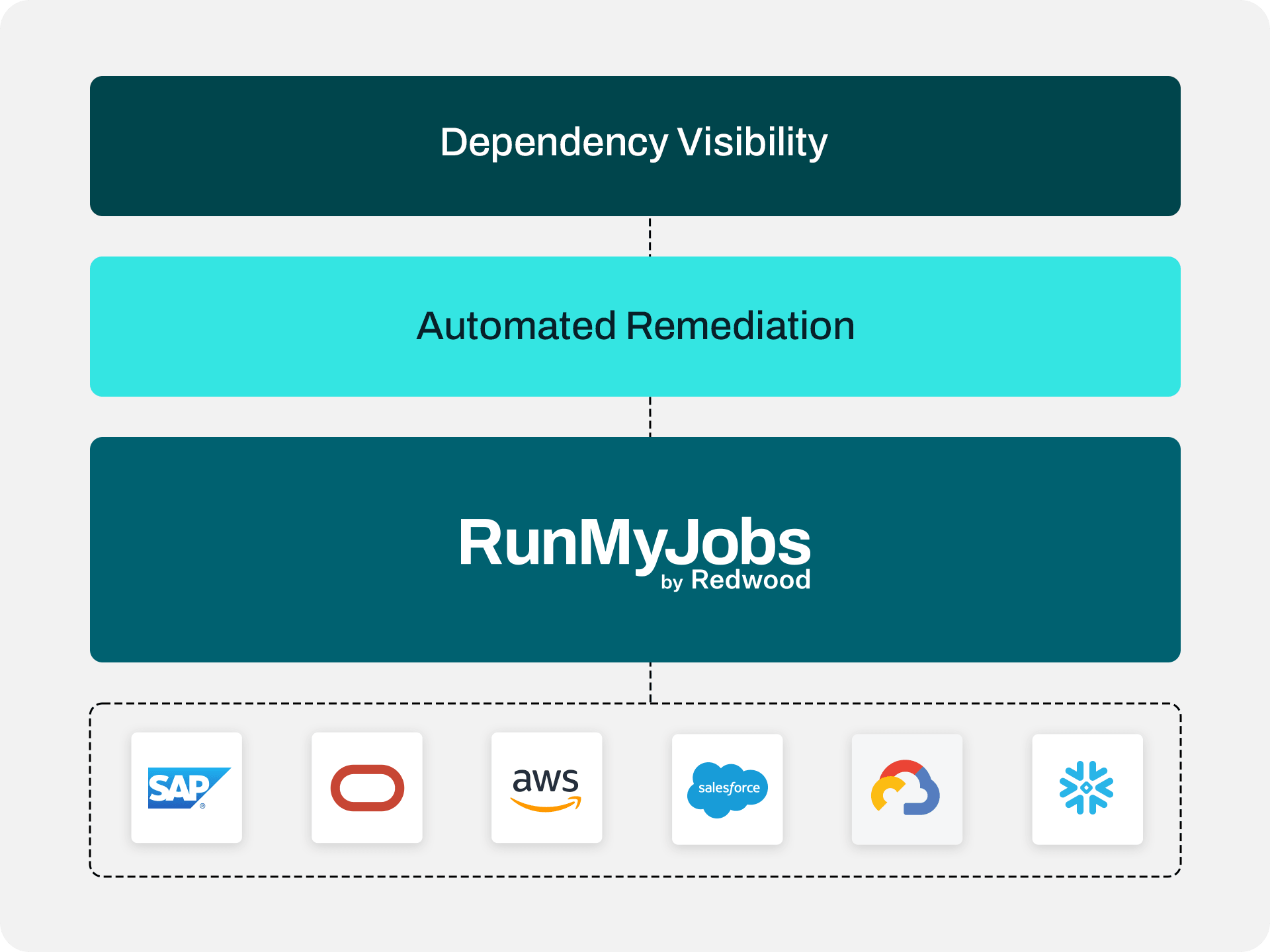
Governed data pipeline execution your business can depend on
Fragmented application-native schedulers, open-source domain-specific schedulers, custom scripts and siloed cloud services tooling leave end-to-end ownership unclear. RunMyJobs replaces these with a single governed execution layer, connecting SAP, cloud platforms, data lakes and partner file feeds with end-to-end SLA monitoring, dependency visibility and automated remediation built in.
One control plane for every data pipeline challenge
RunMyJobs gives IT Ops teams production-grade control over data pipelines across SAP, cloud and on-premises systems, so the business never has to find out a pipeline failed from a missed deadline.
-
Orchestration
Learn MoreCoordinate workflows across SAP, Oracle, cloud services and partner ecosystems from a single execution layer. RunMyJobs connects ERP jobs, Snowflake loads, Azure Data Factory pipelines and edge file ingestion with cross-system dependency mapping so upstream changes don’t break what runs downstream.
-
Governance and compliance
RunMyJobs centralizes execution logs, workflow history and access controls across every pipeline, giving IT Ops and data teams a complete audit trail for GDPR, DORA, SOX and AI Act obligations without manual evidence collection across disconnected tools.
-
SLA monitoring
Learn MoreRunMyJobs tracks data pipeline delivery against business deadlines, not just technical job completion. AI-powered monitoring surfaces anomalies early, automated remediation reduces MTTR and teams can act before an SLA is missed rather than after the business feels it.
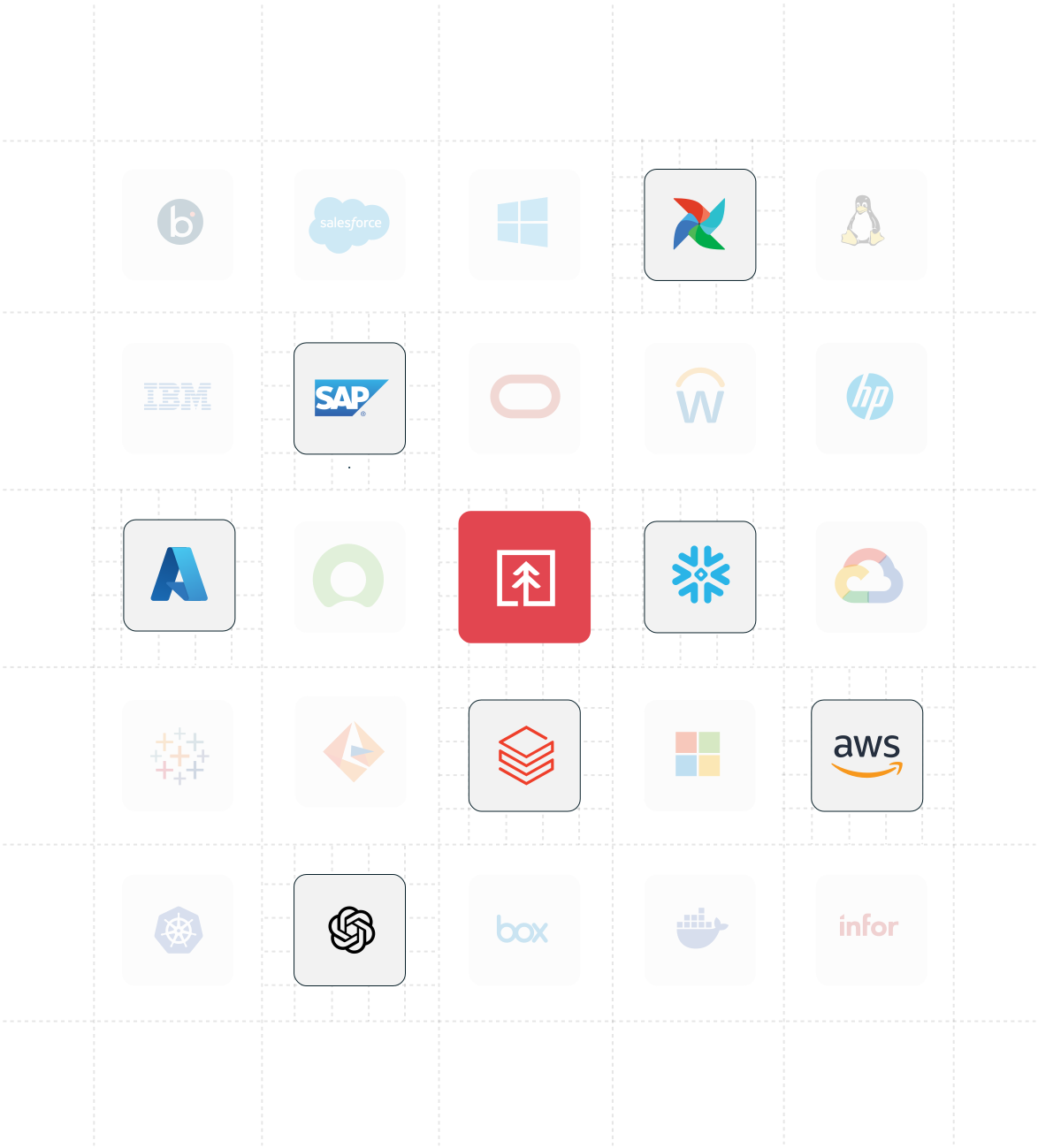
Connect your entire ERP ecosystem out of the box
RunMyJobs includes pre-built templates and connectors across ERPs, SaaS applications, cloud platforms, data technologies and ITSM tools — no custom scripting required.
- SAP Cloud ERP, BTP, BDC, Cloud ALM and Analytics Cloud
- Oracle ERP, EPM
- Hyperscalers (AWS, Microsoft Azure, Google Cloud Platform)
- Data platforms (Snowflake, Databricks, Airflow)
- Open source (Airflow, Kubernetes)
What’s next in enterprise automation
Modernize, orchestrate and scale with confidence.

Blog
The foundation every enterprise needs
Learn why orchestration is critical for scaling agentic AI.

Blog
What cloud modernization delivers
Understand how cloud modernization drives real business value.

ERP automation FAQs
What are the 4 main ERP systems?
The four main ERP systems are SAP, Oracle, Microsoft Dynamics and Infor. These ERP software platforms support core business processes such as financial reporting, procurement, inventory management and human resources.
Each ERP system is designed for different enterprise needs. SAP and Oracle are widely used in large, complex environments, while Microsoft Dynamics integrates well with CRM and business applications. Infor focuses on industry-specific ERP solutions. Many organizations use ERP systems alongside workflow automation software and other automation solutions to streamline operations, reduce time-consuming manual intervention and improve data accuracy.
What are the top 3 ERP systems?
The top three ERP systems are SAP, Oracle and Microsoft Dynamics. These leading ERP software platforms are known for scalability, cloud-based capabilities and support for enterprise resource planning across global organizations.
SAP is often used for mission-critical ERP processes, while Oracle provides a strong cloud ERP platform with financial and forecasting capabilities. Microsoft Dynamics offers flexibility and seamless integration with existing tools. Together, these ERP solutions help organizations optimize business operations, improve decision-making and manage real-time data across hybrid cloud environments.
What is ERP automation?
ERP automation is the use of software to automate business processes within and around an ERP system. It reduces manual tasks such as data entry, invoice processing and financial reporting, improving efficiency and accuracy.
Modern ERP automation connects ERP workflows with SaaS applications, cloud-based platforms and data systems to enable seamless integration. This allows organizations to streamline operations, gain real-time visibility into business processes and support data-driven decision-making while reducing human error and operational bottlenecks.
What should enterprises consider when choosing an ERP automation platform?
Enterprises should look closely at how well a platform connects to their core ERP systems, since automation only pays off when it reduces manual work across SAP, Oracle and other applications rather than adding another disconnected tool. Look for pre-built connectors, native support for your ERP vendor and the ability to manage dependencies between ERP jobs and the applications around them. Governance matters as well, so look for an ERP automation platform that includes role-based access, audit trails and compliance reporting to help IT and finance teams trust what the automation is doing, especially in regulated industries.
Total cost of ownership (TCO) is another factor worth examining closely. A SaaS-based platform removes the burden of patching, upgrading and maintaining servers, while a platform built for hybrid cloud lets you automate legacy ERP processes alongside newer cloud applications without forcing a full replatforming. RunMyJobs by Redwood was built with these considerations in mind and offers deep SAP and Oracle integration alongside AI-powered monitoring that flags SLA risks before they affect your business.