
Blog
SOAP platforms in the wild: Top 5 use cases
Automate real-world workflows across ERP, cloud and data systems.
RunMyJobs by Redwood is the leading orchestration platform for the autonomous Oracle enterprise, extending your Oracle job scheduler capabilities to scale, secure and govern mission-critical processes across your entire ecosystem.
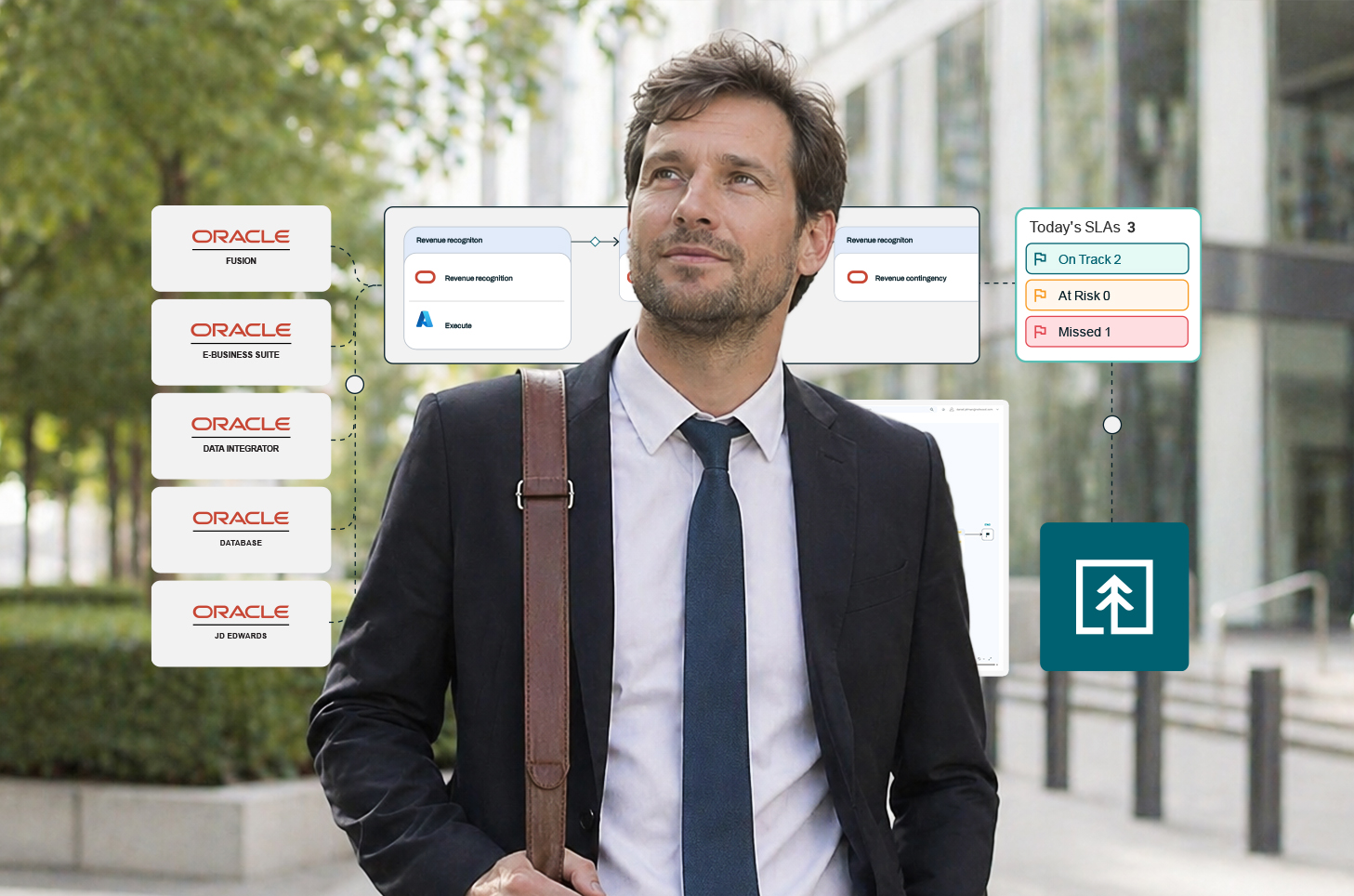
Retire application-specific schedulers by moving to a single, SaaS-native control plane that orchestrates your entire enterprise.

Connect securely to Oracle Fusion ESS and EBS to automate job scheduling, PL/SQL stored procedures and end-to-end business processes without added infrastructure.

Run on a fully managed, cloud-based orchestration platform with 99.95% uptime and SOC 1 and SOC 2 Type 2 compliance across enterprise cloud applications.

Migrate legacy Oracle EBS schedulers to OCI and modern cloud ERP environments without disruption while supporting hybrid ERP implementation.

Design and automate workflows across financial management, procurement, order management and supply chain processes using a low-code interface instead of manual scripting.

Create secure logical partitions across Oracle business units and development lifecycles while maintaining centralized control, compliance, and audit-ready governance.

Use built-in AI to automate, optimize and scale ERP workflows, improving real-time decision-making and end-to-end business process performance.
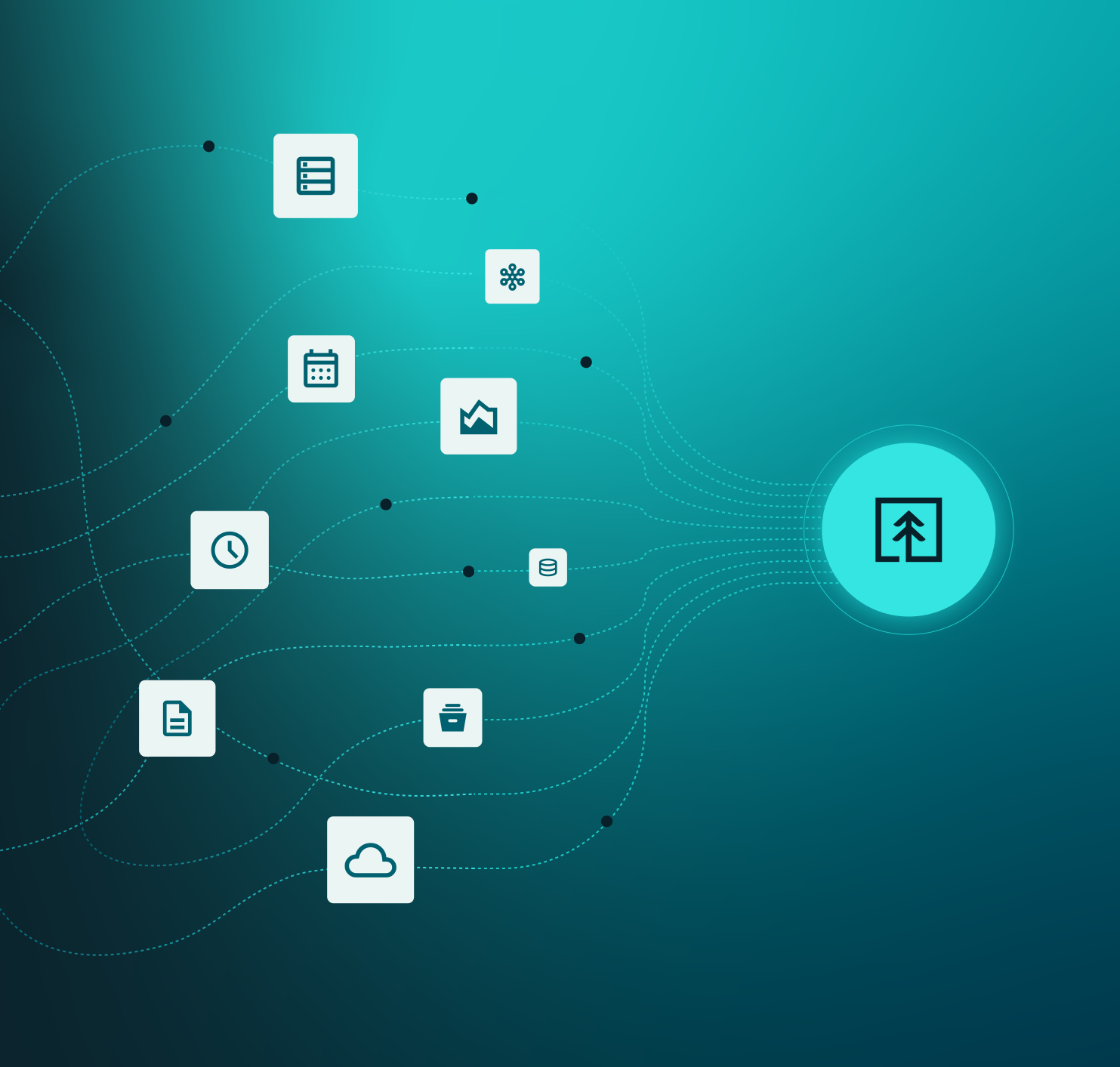
Oracle environments were built to run mission-critical processes — not to work together across hybrid cloud applications. The result is a stack of application-specific schedulers, manual handoffs and growing technical debt that slows every team that depends on it.
RunMyJobs turns that fragmented landscape into a single, connected system.
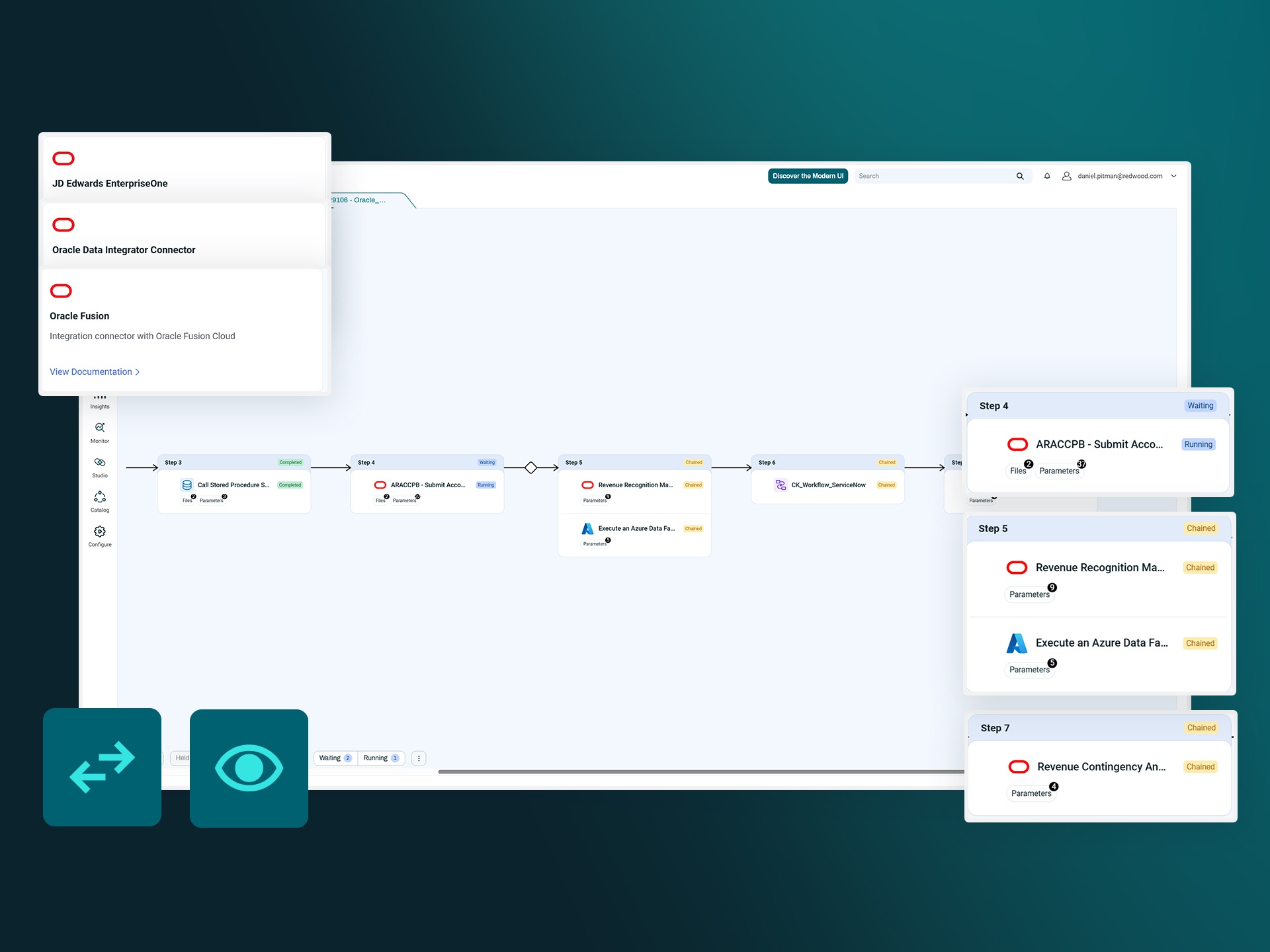
Most enterprises run Oracle Fusion Cloud alongside on-premises EBS or JD Edwards — and will for years. Managing workflows across these environments creates complexity, delays and risk without a unified orchestration layer. RunMyJobs is the only SaaS-native orchestration platform that treats both environments as first-class citizens in a single workflow, with no infrastructure overhead on either side.

Run record-to-report processes that start in on-premises EBS and finish in Oracle Fusion Cloud Financials without manual handoffs.

Trigger JD Edwards UBEs and Oracle Data Integrator load plans the instant a shipment notification arrives via JSCAPE MFT.

Transform Oracle-centric data workloads so finance and operations teams work from current data, not yesterday’s batch output.
Bring Oracle ERP, database jobs and data pipelines together into unified workflows.
Gain ultimate control and maximize efficiency by integrating Oracle Fusion into your business processes.
Streamline and monitor ERP processes to reduce delays in financial reporting.
Run PL/SQL, queries and stored procedures as part of orchestrated workflows.
Trigger and manage ODI load plans and data workflows based on business events.
Monitor and manage JDE jobs with visibility into potential failures before they impact operations.
Easily integrate various scripting languages into your workflow design and execution.
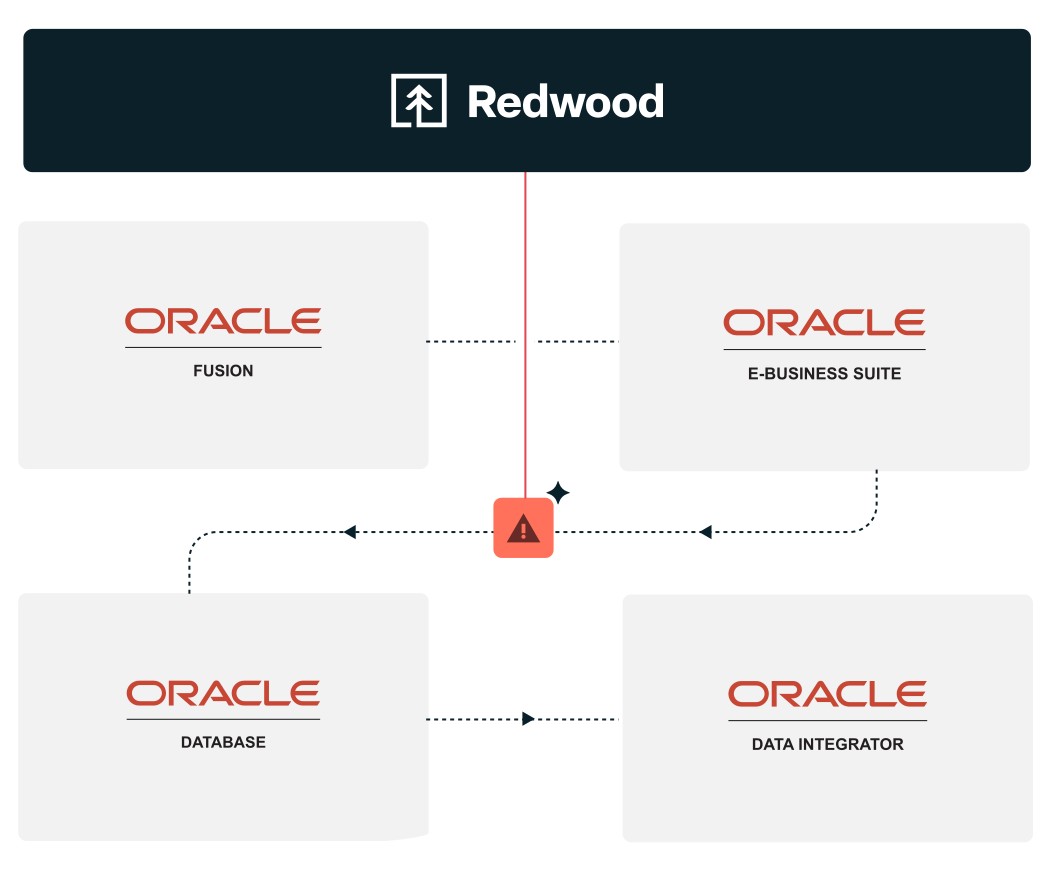
RunMyJobs uses AI-powered predictive analytics and machine learning to monitor Oracle job execution in real time, comparing live performance against historical data. When a batch job in EBS or Fusion ESS is trending toward a delay, the platform flags it before it becomes a failure — and before it reaches a downstream SLA.
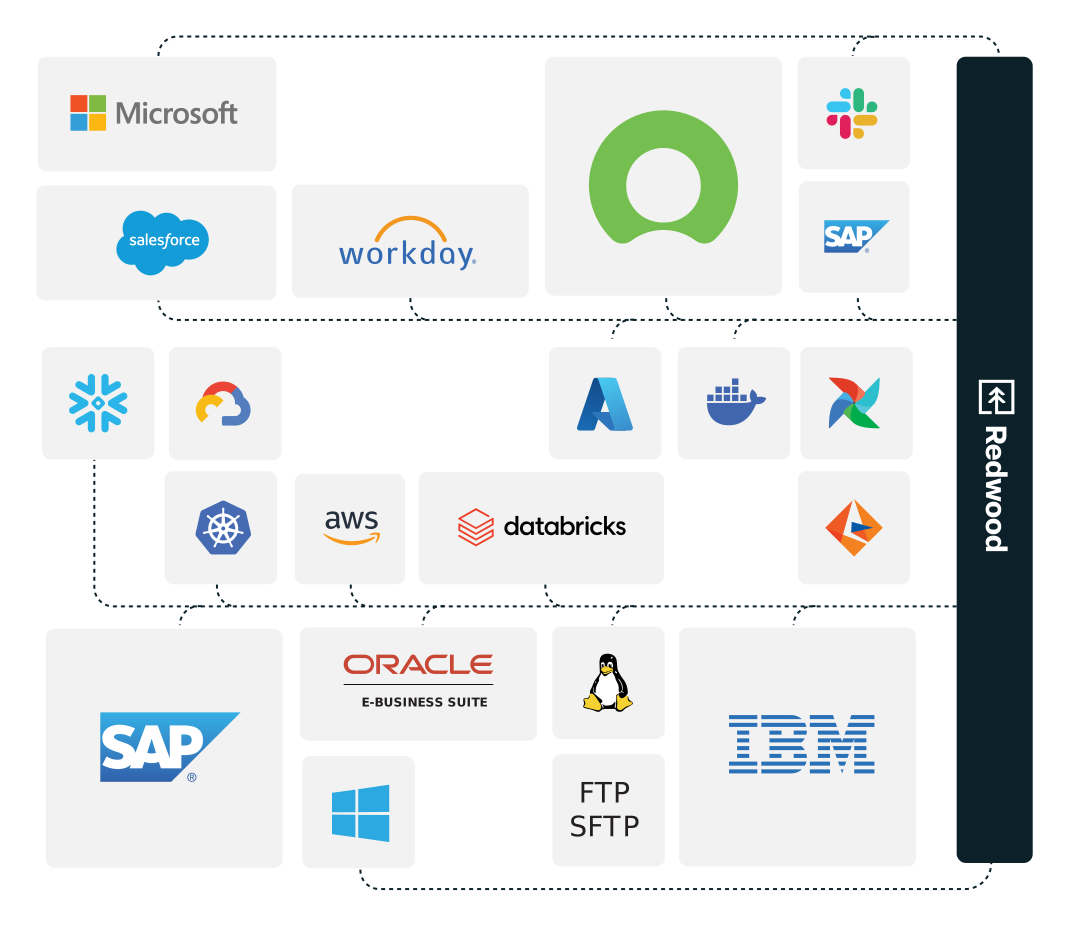
Modern enterprise business processes span a complex fabric of disparate ERP systems, data management platforms and cloud-native services that must work in perfect synchronization. When workflows span on-premises environments and SaaS applications, manual handoffs and siloed scheduling increase operational risk and limit visibility.
RunMyJobs connects these systems into a single orchestration layer. It acts as the connective tissue between your ERPs, data platforms and hybrid cloud infrastructure, giving you a unified audit trail and a single SLA view across every dependency.
Keep exploring ERP automation and cloud strategies.



Oracle ERP Cloud is a cloud-based enterprise resource planning (ERP) system that helps organizations manage core business functions like financial management, procurement, project management, risk management and supply chain management in a single platform. As part of Oracle Fusion Cloud applications running on Oracle Cloud, it delivers real-time data, automation and advanced analytics to support faster, more informed decision-making.
Unlike traditional on-premises ERP systems, Oracle ERP Cloud solutions are delivered as Software-as-a-Service (SaaS), which means you don’t need to manage infrastructure, upgrades or maintenance. This allows enterprises to streamline business processes, improve financial close and reporting and scale operations more efficiently.
Oracle ERP Cloud also integrates with other enterprise systems such as customer experience (CRM), human capital management (HCM) and enterprise performance management (EPM), enabling end-to-end visibility across the organization. With built-in dashboards, KPIs and forecasting tools, it supports better planning, cost management and long-term business performance.
The four main ERP systems are SAP, Oracle, Microsoft Dynamics and Infor. These leading ERP software platforms support core business processes such as financial management, procurement, supply chain management and human resources.
Each ERP system is designed for different enterprise needs. SAP and Oracle ERP systems are widely used in large, complex organizations for financials, supply chain and enterprise resource planning, while Microsoft Dynamics 365 integrates ERP and CRM capabilities across cloud applications. Infor focuses on industry-specific ERP solutions tailored to sectors like manufacturing, healthcare and retail.
Many organizations use these ERP systems alongside automation and orchestration platforms to streamline workflows, reduce manual processes and improve real-time visibility across business operations.
An Oracle job scheduler is a tool used to automate and manage database jobs, batch processes and application workflows within Oracle environments. It allows organizations to schedule and execute tasks such as PL/SQL stored procedures, scripts and data processing jobs based on defined times, events or dependencies.
One of the most commonly used tools is Oracle DBMS_SCHEDULER, which enables users to create jobs using parameters like job_name, start_date, end_date, repeat_interval and job_action. These jobs can run PL/SQL blocks, Java programs, executable scripts or stored procedures, and can be monitored through views like DBA_SCHEDULER_JOBS and scheduler_job_run_details.
While Oracle job schedulers are effective for automating tasks within a single system, they are typically limited when it comes to orchestrating workflows across multiple ERP systems, cloud applications and external services. To automate end-to-end business processes such as financial close, order management or supply chain workflows, organizations often extend their Oracle job scheduler with a centralized orchestration platform that provides real-time visibility, dependency management and cross-system automation.