Blog
Tailored cloud orchestration
Replace timer-based handoffs between SAP and AWS with workflows triggered by real events.
RunMyJobs by Redwood orchestrates the business processes that span from your on-premises applications and data to AWS, Azure and Google Cloud. Get one end-to-end view of every process, across native and cloud tooling, and one SLA across boundaries.
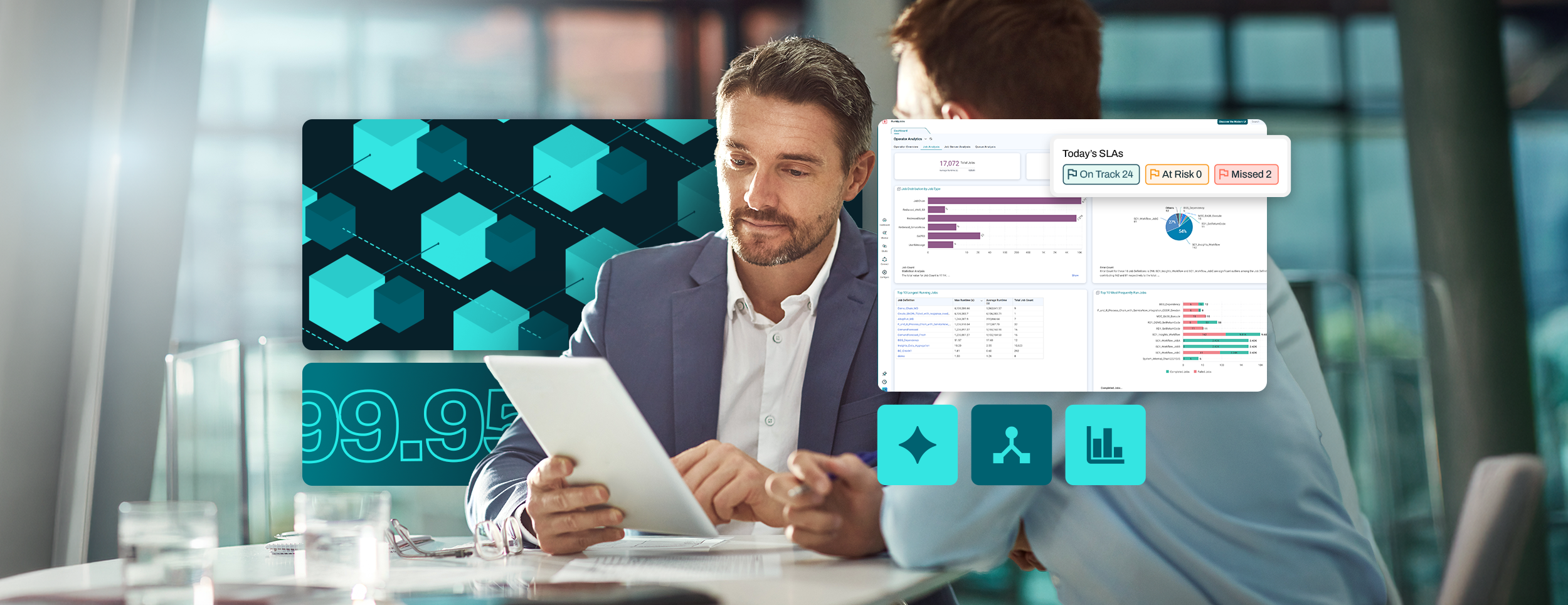
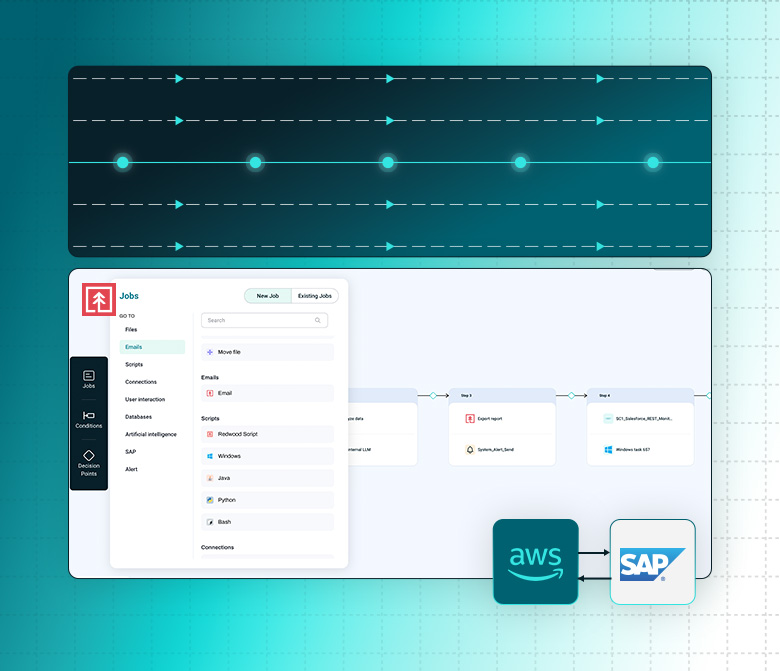
Multi-cloud orchestration coordinates the workloads and business processes that run across public cloud providers and on-premises systems. It governs what runs, in what order and whether the business outcome arrives on time, while each cloud keeps its native tools.
Each cloud ships its own workflow tools, and each stops at its own boundary. Most business processes don’t.

AWS Step Functions, Azure Data Factory, Airflow and Snowflake tasks each run their own part of a process. None can wait on another, so teams bridge the gaps with scripts only their authors understand.
When a process breaks between clouds, operations teams move between consoles to find where it started. Inconsistent observability across environments turns a short incident into hours of tracing.
Every system reports its own SLA, and all of them can show green while the business outcome is late. Without one deadline across clouds, nobody can commit to one business outcome.
A process built inside one cloud’s workflow service stays there. Every environment change means more scripts, more dependencies that only their authors understand and more risk.
RunMyJobs triggers and monitors each cloud’s native tools as steps in one end-to-end process, so your teams keep what they know and the business gets one process it can trust.
RunMyJobs extends your existing Step Functions, MWAA and EventBridge workflows across hybrid boundaries, without rewriting what your AWS teams already run.
Your Azure data pipelines no longer end at the cloud boundary. RunMyJobs puts them in the same workflow as your AWS and on-premises work, with dependencies the Azure tools can’t see on their own.
Your data engineers built their pipelines in Airflow, and it does its job well. RunMyJobs keeps those DAGs exactly where they are and adds the governance and cross-system dependencies Airflow can’t provide.
Analytics and AI depend on data that arrives complete. RunMyJobs runs Snowflake and Databricks jobs under the same governance as the rest of your workflows, with automatic retries on transient failures.
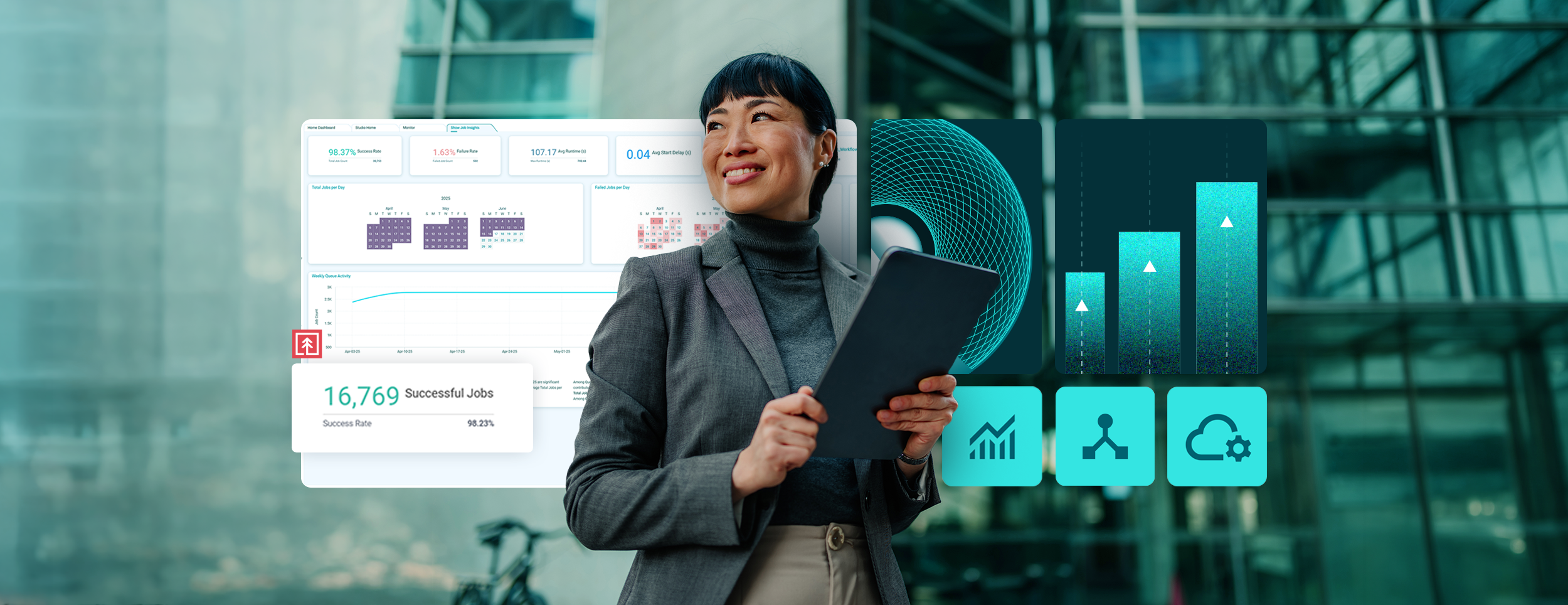
When a step runs late in one cloud, RunMyJobs calculates the downstream SLA impact instantly, across AWS, Azure, Google Cloud, ERPs and on-premises systems, before anyone has to open a console. One owner holds one deadline across every environment.
Each run, change and dependency lands in one audit trail with role-based access controls. Governance doesn’t require a separate tool for each cloud — it’s built into the same layer that runs the process.
Managing multi-cloud environments shouldn’t mean managing more tools. RunMyJobs gives your teams one orchestration layer across every cloud, with no new infrastructure to maintain.
Define each business process once in RunMyJobs and run it across any cloud, without rebuilding when your strategy changes.
Keep the native tools your cloud teams already use, and add the cross-cloud layer none of them provides alone.
See every dependency, run and SLA across clouds in a single pane of glass instead of switching consoles to trace a failure.
Start downstream work the moment data arrives in any cloud, so processes finish sooner and waiting stops costing you money.
Run orchestration as SaaS with a 99.95% uptime SLA, so adding a cloud service never adds software to deploy or maintain.
Connect MCP-compatible AI assistants to RunMyJobs to enable your teams to use the tools they already have, with full audit coverage.

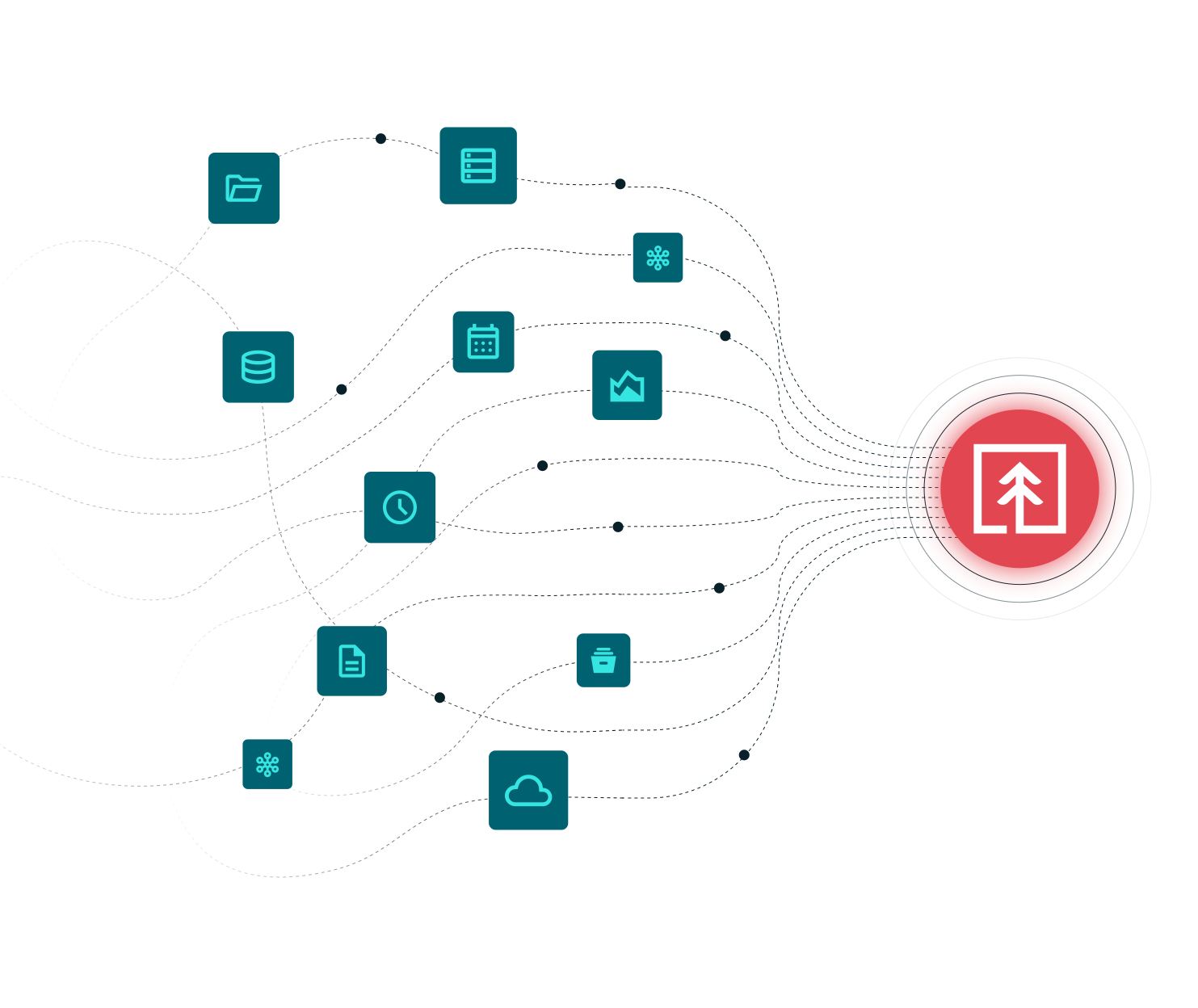
RunMyJobs integrates with a broad range of technologies across your cloud stack, including AWS, Azure, Snowflake, Databricks and Apache Airflow, through pre-built connectors.
The Connector Wizard adds any REST API without custom scripting.
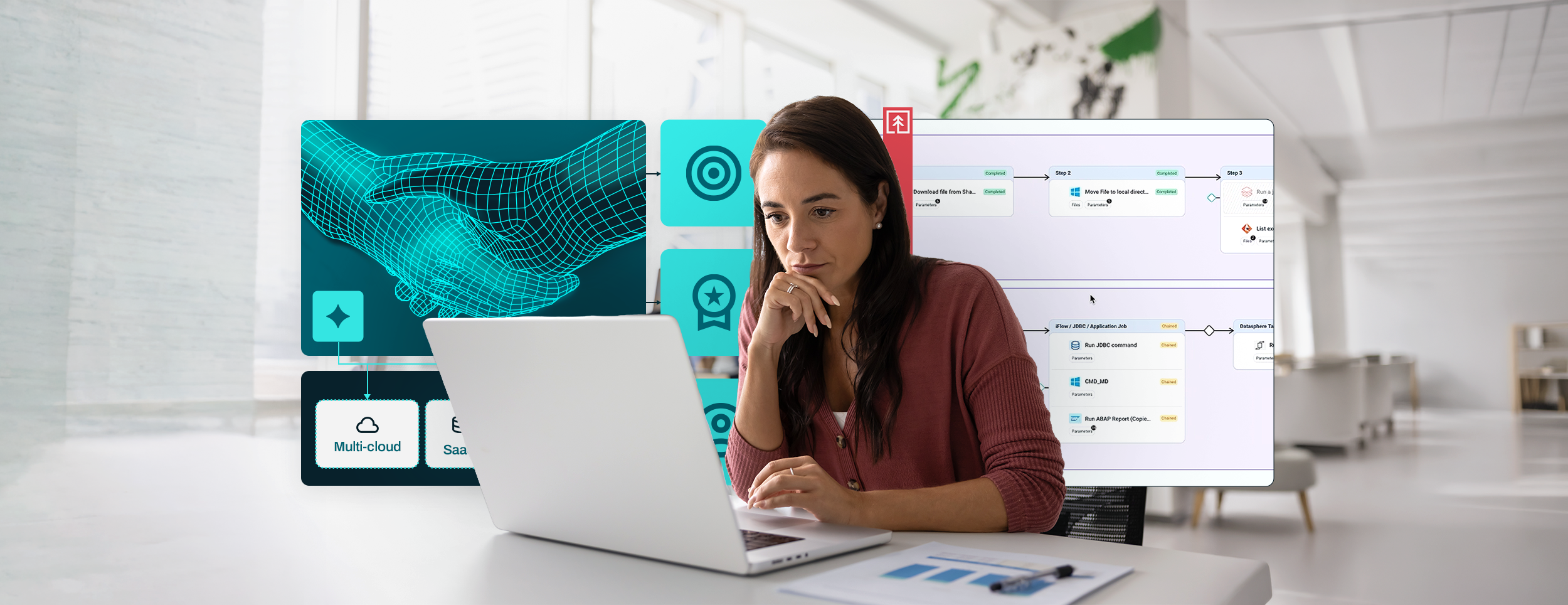
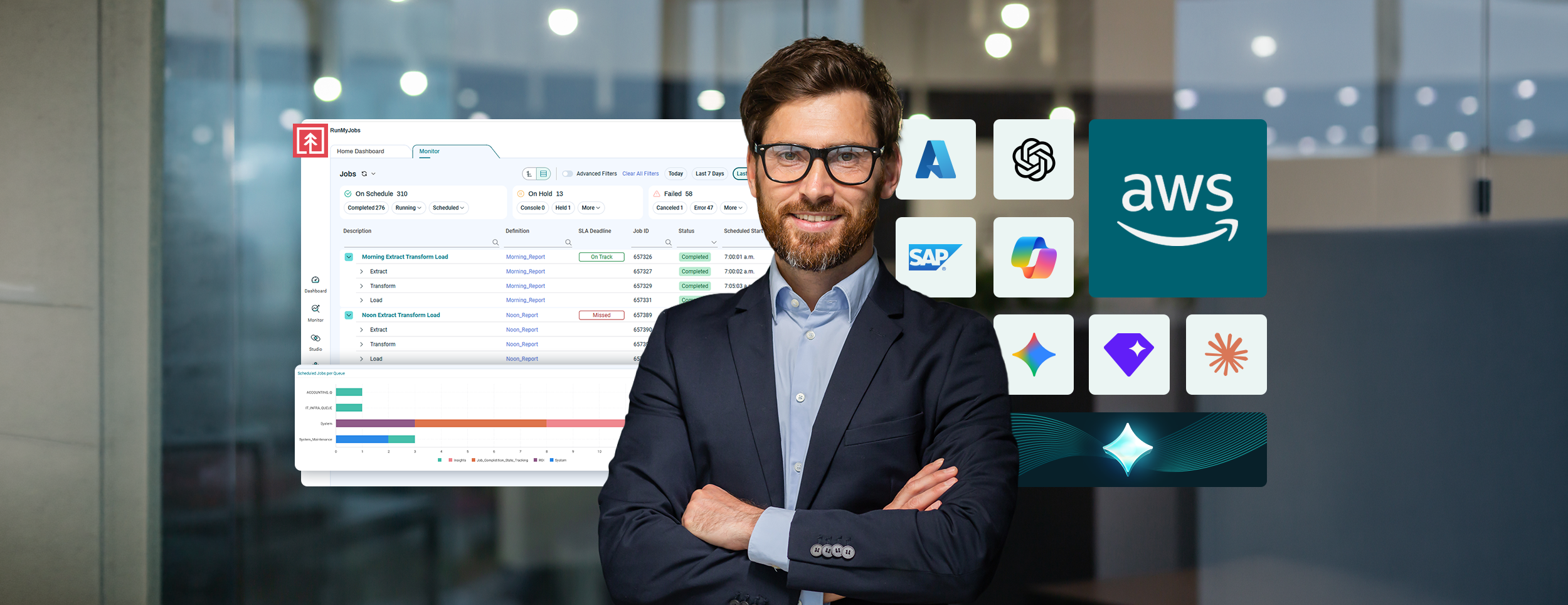
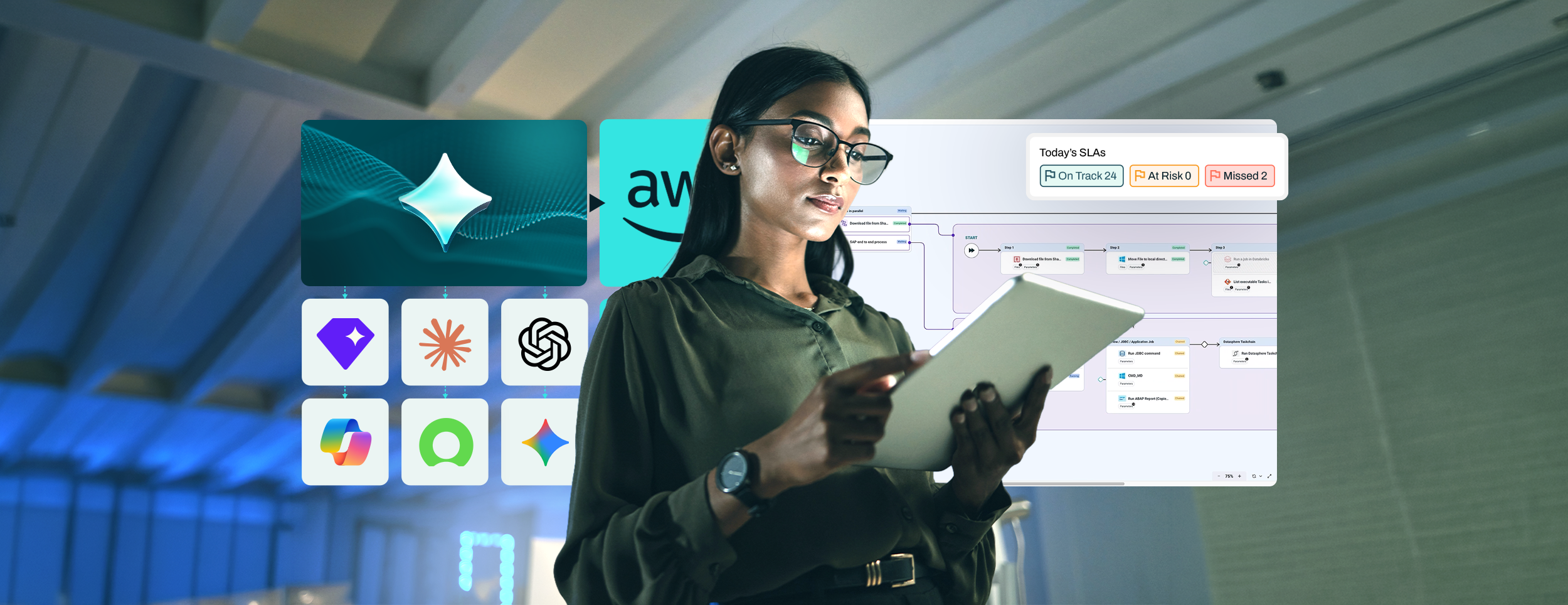
Multi-cloud orchestration coordinates workloads and business processes across public cloud providers and on-premises systems, in the right order and at the right time. It connects the native tools in each cloud so teams manage one end-to-end process, not several disconnected ones.
A well-designed multi-cloud orchestration layer also reduces vendor lock-in by keeping process definitions portable across providers, supports disaster recovery by distributing workloads across environments and gives FinOps teams the visibility to act on real usage data.
RunMyJobs by Redwood orchestrates around each cloud’s native tools from one SaaS control plane, with one SLA and one audit trail.
Multi-cloud uses two or more public cloud providers, such as Amazon Web Services (AWS), Azure and Google Cloud Platform (GCP). Hybrid cloud combines public cloud with private cloud or on-premises systems. Most enterprises run both, which is why multi-cloud strategies and hybrid cloud architectures often overlap in practice.
RunMyJobs by Redwood orchestrates across hybrid cloud and multi-cloud environments from one SaaS control plane.
Multi-cloud automation runs tasks and workflows across cloud providers without manual steps. It covers scheduling, event triggers and dependencies across cloud services, Kubernetes clusters and on-premises systems, so processes that cross clouds run unattended and on time. Most enterprises use a combination of cloud-native automation tools and a cross-cloud orchestration layer to cover the full scope.
RunMyJobs adds governance on top: role-based access, predictive SLA monitoring and a complete audit trail.