The automation void
How compliance tools still leave the close running on uncontrolled journals and risk
Most finance organizations rely on compliance tools to bring structure and visibility to the close. Tasks are tracked, approvals are logged and audit trails are easy to access, which creates the impression that the process is automated.
But the work that determines what gets posted — journal creation — still happens manually outside your core systems. Download this playbook to see where manual execution hides, how it impacts risk and audit outcomes and what it takes to replace it with system-driven execution.
Download report
Why download this guide?
Understand how journals are actually built across your close and where your current tools stop short.
This playbook gives you a clear way to evaluate whether your processes are driven by systems or sustained by manual effort. You’ll walk away with a practical lens to assess your journal workflows, identify hidden dependencies and pinpoint where execution can move out of spreadsheets and into your systems.
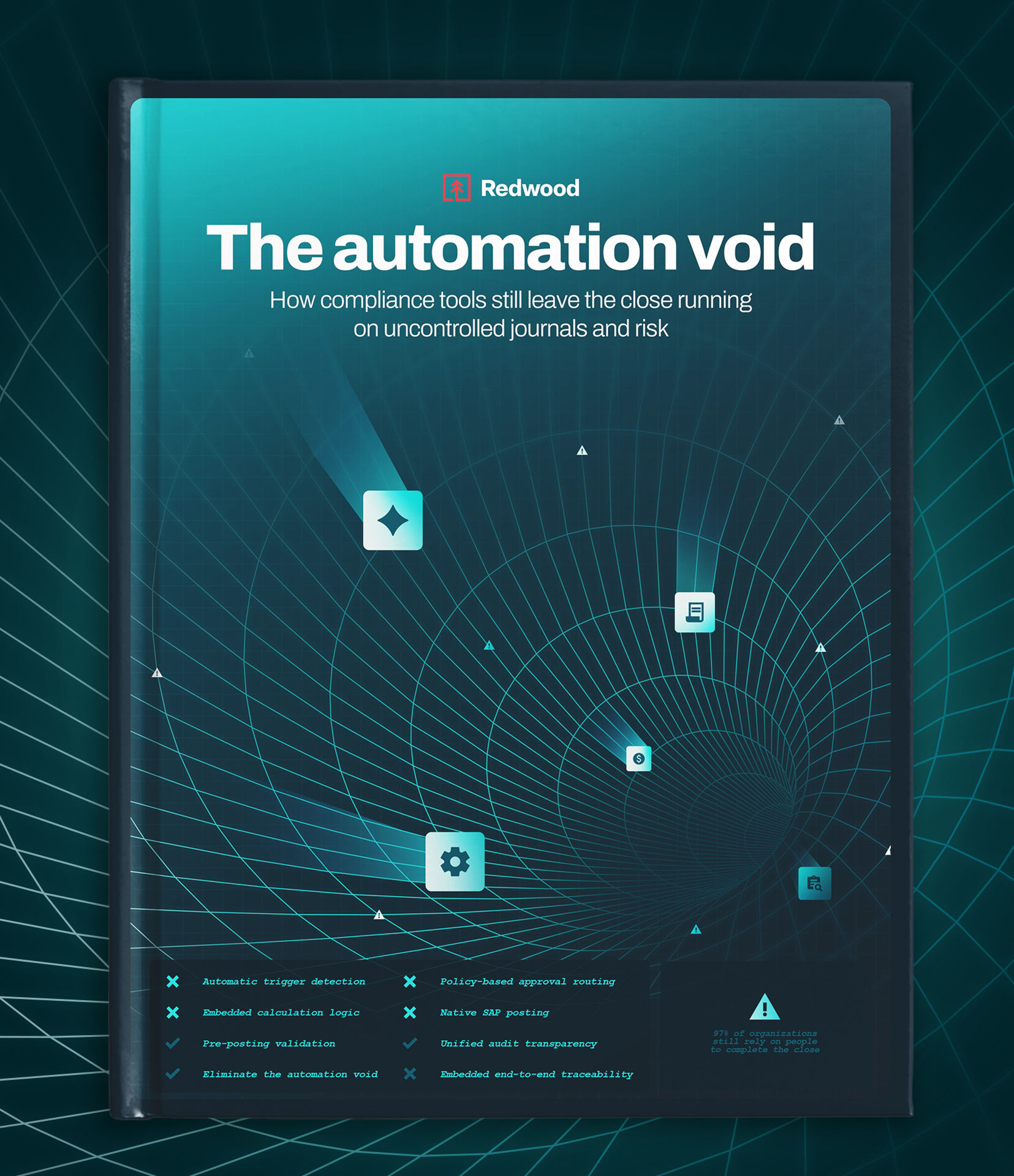
Inside, you’ll find:
- A side-by-side comparison of compliance-driven workflows and orchestrated journal processes
- A detailed breakdown of how journals are still created across data, logic, approval and posting
- The most common gaps that introduce rework, inconsistency and audit exposure
- The downstream impact on SAP processes, reporting and close timelines
- A clear view of how orchestration replaces manual journal creation with automated system-driven processes