Proactive monitoring capabilities that catch issues before they reach operations
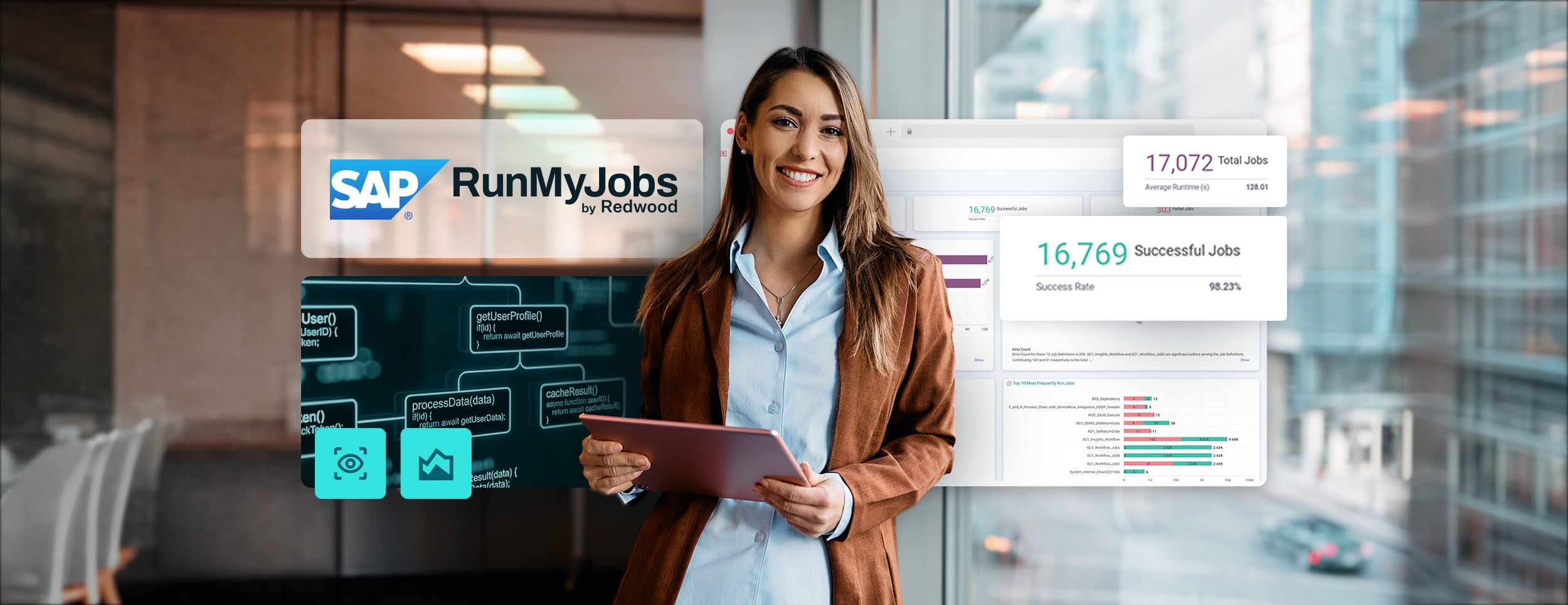
A failed job rarely stays a single failed job. When a payroll run, a shipment file or an SAP posting misses its window, every downstream step waits, and the business often notices before IT does.
Proactive monitoring changes the order of events. It flags issues while there’s still time to act, triggers a fix automatically when it can and alerts the right person when it can’t. Critical work stays on schedule, and service uptime holds.
NGA Human Resources protects payroll deadlines
NGA Human Resources runs HR and payroll services for three million employees in more than 100 countries. For a payroll provider, a late run is a missed commitment to every client and every employee waiting to be paid.
NGA uses RunMyJobs by Redwood to automate thousands of interfaces across its cloud and on-premises HR applications. Predictive monitoring and automated recovery help ensure strict payroll SLAs, so the team resolves issues before a deadline slips.
How predictive SLA monitoring identifies issues early
Predictive SLA monitoring in RunMyJobs tracks business deadlines, such as a payroll cutoff or an order shipment, as well as individual job completion. It uses historical execution data and dependency analysis to flag at-risk workflows before the SLA window closes, while your team still has time to respond. That early issue identification leaves room to rerun, reroute or escalate before anyone downstream feels the delay.
- AI-driven early warnings: Flags at-risk workflows before deadline windows close
- Configurable thresholds: Alert rules match your business SLAs and recovery windows
- Cross-platform dependency mapping: You see where a delay started across SAP, cloud and legacy systems
- Single control plane: RunMyJobs shows workflows across Amazon Web Services (AWS), SAP, legacy systems and on-premises applications in one place
Monitoring works best when you know what normal looks like. Start with the workflows that support your most important deadlines, and define the expected runtime and cutoff for each one.
How automated alerts and remediation speed up response
An alert helps only when it reaches someone who can act on it, with the context they need. RunMyJobs routes alerts to the appropriate teams through escalation rules, so the right owner hears about a problem first.
For well-understood failures, you can set rules, so RunMyJobs acts automatically when an SLA is at risk. That turns risk mitigation into a rule instead of a scramble. Your team handles only the cases that need judgment.
Strong automated alerts share four traits:
- Clear severity levels: Teams focus on the alerts that matter most
- Context in every alert: The job log, affected systems and responsible owner arrive with the notification
- Escalation paths: Unresolved issues move to the next owner automatically
- Automated recovery: Known failure patterns trigger a policy response without a ticket
When a person needs to investigate, the Redwood RangerAI Product Assistant analyzes the failure and suggests a likely fix. Faster investigation lowers mean time to resolution (MTTR). Newsday Media Group reports an 83% reduction in MTTR after it standardized 145+ business processes in RunMyJobs, thanks to consistent patterns, centralized monitoring and clearer operator actions.
How performance tracking with Redwood Insights drives optimization
Performance tracking shows where workflows are slowing down before they fail. Redwood Insights adds observability and analytics to RunMyJobs, with pre-built and customizable dashboards that identify bottlenecks, track performance and meet compliance requirements. Redwood Insights also supports root-cause analysis and historical trend views.
Redwood Insights Premium adds no-code custom dashboards and 15 months of historical data, so you can compare performance across seasons and measure the return on each change.
Track these metrics to guide performance optimization:
- Average and peak job runtimes
- Success and retry rates for critical processes
- Resource utilization across cloud and on-premises systems
- End-to-end process duration against business targets
With trends in view, you can rebalance schedules that crowd peak windows, fix dependencies that cause repeat delays and check each change against its baseline.
Redwood Insights also integrates with the observability tools your teams already use, including AppDynamics, Datadog, Dynatrace, New Relic, SAP Cloud ALM and Splunk. Builders FirstSource gained application-level observability across its 600+ locations with Redwood Insights.
How unified monitoring protects operational continuity across SAP and the cloud
Critical work rarely lives in one system. A single business process can start in SAP, move a file to a partner, run a job in the cloud and finish on an on-premises server. RunMyJobs is a cloud orchestration platform that runs work across all of those environments, so one view covers the whole process.
SAP is often where visibility matters most. RunMyJobs is an SAP Endorsed App and the only service orchestration and automation platform (SOAP) in the RISE with SAP reference architecture. Its connector for SAP Cloud ALM brings automated jobs and workflows across SAP and non-SAP systems into SAP’s own monitoring view.
Across SAP and cloud environments, watch for:
- Cloud service limits and region-level incidents that affect availability
- Late or incomplete partner files that stall SAP postings are caught by predictive SLA monitoring in RunMyJobs
- Integration errors in middleware or cloud integration platforms
- Process completion for key SAP batch jobs and interface points
If you’re moving from SAP ERP Central Component (ECC) to S/4HANA, build risk mitigation into the cutover plan. Run the same end-to-end monitoring checks before and after cutover and compare the results. RunMyJobs keeps automations running during the move and supports zero-downtime migrations from legacy schedulers.
What high reliability standards look like in practice
High reliability standards start with the platform itself. RunMyJobs guarantees 99.95% SaaS uptime, and Redwood is ISO 27001, SOC 2 Type II and TX-RAMP certified. Redwood is named a Leader in the 2026 Gartner® Magic Quadrant™ for Service Orchestration and Automation Platforms for the third consecutive year and positioned furthest in Completeness of Vision. Redwood serves 7,500+ customers, its platform has run more than 50 billion automations and RunMyJobs guarantees 99.95% uptime.
Reliability also means knowing exactly what happened. RunMyJobs keeps audit trails that show what ran, when it ran and who changed workflow execution. Role-based access controls limit changes to authorized users.
For some businesses, reliability is the product. Toon Koppelaars, IT Manager at book logistics company CB, calls Redwood its “most business-critical component” for fulfilling orders and delivering them on time.
How monitoring extends to AI agents inside your workflows
As AI agents take on more work, they need the same monitoring as every other step. Agent Studio in RunMyJobs lets you build custom agents that run as steps inside a workflow, so they inherit its schedule, governance and observability, with timeout and cost controls built in.
Operations Agent detects job failures, SLA risks and silent issues before they escalate. Each alert arrives with job history, downstream impact, SLA countdown and a recommended next action, so users can respond faster. When an alert lands, the AI Assistant in Redwood RangerAI helps operators troubleshoot with AI-powered guidance, so diagnosis doesn’t depend on whoever knows the workflow best. Redwood’s agentic orchestration keeps human oversight in place wherever decisions carry consequences.
How to raise your monitoring maturity
Moving from reactive to proactive monitoring is a step-by-step path toward operational excellence. Each step makes the next one more effective:
- Baseline your critical workflows: Define normal runtimes and the business deadline each workflow supports
- Tune your alerts: Set clear severity levels, add context and route each alert to an owner
- Unify your view: Bring SAP, AWS, cloud and on-premises monitoring into one control plane
- Automate recovery: Let known failure patterns trigger remediation without a ticket
- Review each cycle: Study trends, fix the top recurring delay and measure the result over 30 days
Where to start with proactive monitoring
Start with the workflow whose missed deadline would hurt most, such as payroll, order fulfillment or an SAP batch job. Once that workflow runs predictably, extend the same approach to the next one.
See how your automation compares in Redwood’s Enterprise automation index 2026 report, or request a demo of RunMyJobs to see predictive SLA monitoring and Redwood Insights in action.